
Pylon, Monument, and Channel Letter Signs: How the Permitting Really Differs
Three businesses can order three very different signs and hit three completely different permit processes. A ground-level monument, a tall pylon, and a set of lit channel letters on a storefront each get reviewed under their own rules, by their own departments, on their own timeline. Miss that up front and you end up resubmitting applications and pushing your opening back. Here is how the three actually differ across Southern New Hampshire and North Shore Massachusetts, and what to line up before you order.
Key Takeaways
No single permit covers all three. Monument, pylon, and channel letter signs each get reviewed differently.
Monument signs are judged mostly on setback, height, and how they fit the entrance.
Pylon signs add structural and height review because they stand tall and carry wind load.
Channel letters trigger an electrical inspection on top of the usual zoning sign-off.
One shop handling design, permitting, fabrication, and install keeps the whole thing from stalling.
No single permit covers all three. Monument, pylon, and channel letter signs each get reviewed differently.
Monument signs are judged mostly on setback, height, and how they fit the entrance.
Pylon signs add structural and height review because they stand tall and carry wind load.
Channel letters trigger an electrical inspection on top of the usual zoning sign-off.
One shop handling design, permitting, fabrication, and install keeps the whole thing from stalling.
Why does sign permitting change based on the type of sign?
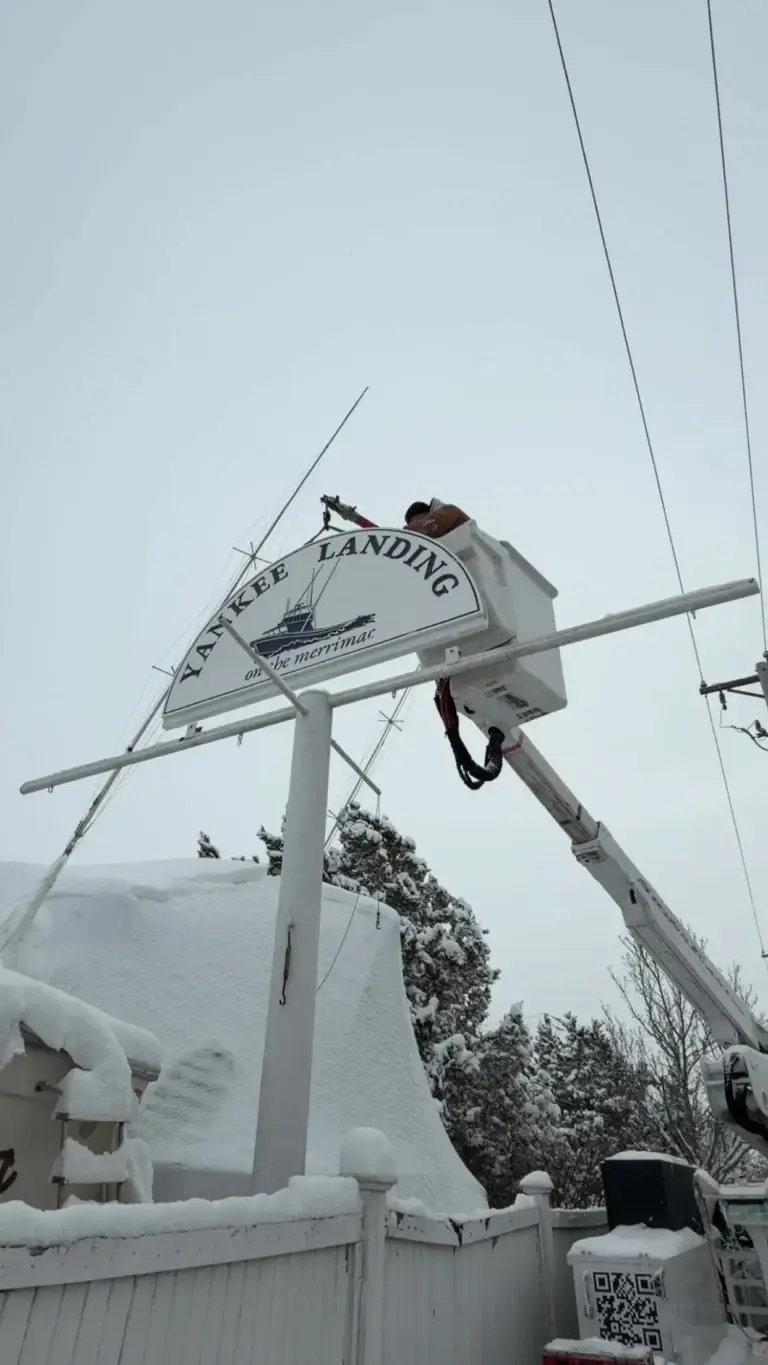
Towns review each sign type differently because each one is built to be seen from a different distance and height. A monument sits low, near the road, and reads at slow speed. A pylon stands up over the property to catch traffic from farther off. Channel letters bolt to the building itself, so they get looked at for how they attach as much as for the sign code. Different height, different mounting, different risk, so the review, the limits, and the paperwork all split apart.
Signs East has handled that split for commercial clients since 2012. We design, permit, fabricate, and install out of our Kingston, NH shop, so the permitting is not handed off to someone who has never seen the sign. That matters most when a job needs to move, because permitting delays are where projects die. Some shops leave clients waiting three months or more before a sign even clears approval. We work to keep that clock short.
Do monument, pylon, and channel letter signs need the same permit?
No. They run on separate tracks:
Monument signs are usually reviewed for foundation, setback from the property line, and overall height set by local zoning.
Channel letter signs usually need electrical sign-off plus specs for how they attach to the facade, since they carry wiring and mount to the building.
Pylon signs often add stricter height caps and structural engineering review because of their height and wind exposure.
Monument signs are usually reviewed for foundation, setback from the property line, and overall height set by local zoning.
Channel letter signs usually need electrical sign-off plus specs for how they attach to the facade, since they carry wiring and mount to the building.
Pylon signs often add stricter height caps and structural engineering review because of their height and wind exposure.
Why compare permit paths before you install?
Because the fastest way to lose a month is to send the wrong application to the wrong department. Lining the three up side by side keeps you from submitting a channel letter facade spec where the town wanted a foundation detail. Here is the short version:
Sign Type | What the Town Reviews Most |
|---|---|
Monument | Setback, height, foundation footing |
Pylon | Pole height, wind load, structural engineering |
Channel letters | Electrical code, facade attachment |
Sign Type
What the Town Reviews Most
Monument
Setback, height, foundation footing
Pylon
Pole height, wind load, structural engineering
Channel letters
Electrical code, facade attachment
Signs East handles the permitting alongside the design, fabrication, and install, so you are not chasing three vendors and hoping they talk to each other. When you order monument signs or a lit facade set from us, the same team that draws it pulls the permit and mounts it.

What do monument sign permits require?
Zoning boards tend to look at a monument sign as part of the property’s entrance, not as a standalone structure. That comes down to where it sits. Because it is close to grade, reviewers often treat it like an extension of the landscaping, the entry drive, and the building around it.
That changes what you submit. Applications often have to show how the sign fits the entrance features already on site, along with the sign face itself. The drawing that gets approved is usually the whole site, with the sign in it.
Where do monument signs make the most sense?
Office parks, retail centers, and professional buildings lean toward monument signs over taller options. Codes in those zones tend to favor low, ground-level identification that keeps sightlines open and the campus looking clean. For a multi-tenant site, a monument also reads as part of a cohesive corporate identity signage program, which is often easier to get approved than a lone tower. Property managers usually find them a smoother path through review for that reason.
What should you confirm before you apply?
A few basics settled early with the vendor and the building department save weeks later:
Whether the town treats the sign as entrance architecture or a separate structure
How setback and height limits apply to ground-level signage on your specific parcel
Whether landscaping or hardscape factors into the approval
Whether the town treats the sign as entrance architecture or a separate structure
How setback and height limits apply to ground-level signage on your specific parcel
Whether landscaping or hardscape factors into the approval
Work those out before fabrication starts. A monument built to match approved plans clears inspection with far fewer headaches than one drawn without that check.
Why are pylon sign rules tougher?
Height is the reason. A pylon rises above traffic, landscaping, and nearby buildings on purpose, so towns review height and setback much harder than they do for a low monument. An elevated structure reads as a bigger visual and structural risk, and that stretches both the timeline and the documentation.
Scale adds to it. A pylon stands well above a monument. But in most Southern NH towns, the allowable height is capped a lot lower than the highway-scale signs you see off the interstate. Confirm your town’s cap early. It is worth the phone call. Twin-pole designs push it further. Two columns give the rigidity a larger sign face needs, but they bring load calculations and foundation specs into the permit that a single-pole or monument sign would not.
When does a property need a pylon instead of a monument?
A pylon suits a business set back from the road or fighting for attention on a busy commercial strip. Limited street frontage or fast, heavy traffic is where the extra height earns its keep. A monument works best when the building sits close to the road and the neighborhood character matters more than long-range visibility.
Do pylon signs face different zoning than monuments?
Yes. Towns weigh visibility against neighborhood character differently for tall structures, so pylon rules in NH often carry stricter height caps and setbacks than monument codes. Before you submit, flag these:
Height review scales with the size of the structure
Twin-pole designs need engineering docs a single-pole sign may not
Setback distance can change how tall you are allowed to go
Structural review adds time over a ground-level approval
Height review scales with the size of the structure
Twin-pole designs need engineering docs a single-pole sign may not
Setback distance can change how tall you are allowed to go
Structural review adds time over a ground-level approval
If a pylon is on your list, budget the extra review time from the start.
How do channel letter permits differ?
Channel letters carry one thing monument and pylon applications skip: electrical review. Because each letter is illuminated and mounts to a facade or raceway, the electrical inspection gets folded into the building permit itself. The letters attach to the structure instead of sitting on their own footing, and that puts them in a different category than a freestanding sign.
Illumination is what drives it. Most channel letter signs run on an LED light source, and that internal wiring usually triggers an electrical inspection on top of the zoning sign-off every exterior sign needs. Plan for a lit storefront sign to run on two review tracks at once, one for placement and size, one for the electrical.
A note on digital and electronic message signs
If your sign plan includes an electronic message center, expect yet another layer. Many towns write separate rules for digital readerboards, covering brightness, how often the message can change, and hours of operation. Those limits vary a lot from town to town, so it pays to check the local code before you commit to a digital face on a pylon or monument.
What should you confirm before ordering channel letters?
Settle the design and the permit scope together, not one after the other. Mounting method and illumination type both change what the town asks for, so locking permit scope before you finalize the design keeps you from paying for a redraw. Signs East also repairs and services channel letters we did not build, so you have one number to call for permitting questions, electrical troubleshooting, and upkeep down the road.
Who should manage the permitting?
Most delays trace back to a coordination gap. When design, fabrication, and permitting sit with separate vendors who barely talk, the property owner is the one stuck relaying messages and losing weeks. One team running all four removes that gap. Signs East is owner-operated by Tor Larson and fully insured, and Tor stays on the job from first drawing to final inspection. You talk to the person actually running it.
Every commercial sign identifies a property from the road, but a monument, a pylon, and a set of channel letters get there under different rules. Footing, setback, height, and electrical each trigger their own check, so treat them as three separate applications rather than one form. Sort that out before fabrication, and the sign clears inspection instead of sitting in limbo. If you have a project coming, call Signs East at (978) 818-1740 and we will walk you through the permit path for your town.
FAQ
Do monument, pylon, and channel letter signs need the same permit?
No. Monument signs are reviewed for setback, height, and foundation. Pylon signs add structural engineering and height-cap review. Channel letters require electrical code sign-off and facade attachment specs.
Why does permitting differ across the three sign types?
Each is built to be seen from a different distance and height. Monuments read at slow speed near the road, pylons target traffic from farther off, and channel letters attach to the building, so each gets its own review standard.
How much taller can a pylon sign be than a monument?
A pylon stands well above a ground-level monument, but the exact limit is set by your town’s zoning, and Southern NH caps are usually well below highway-scale heights. Confirm the local cap before you design one.
Who handles sign permitting in Southern NH and North Shore MA?
Signs East manages permitting alongside design, fabrication, and installation, so property owners deal with one team instead of coordinating separate vendors.