How Permitting and Site Surveys Keep a Grand Opening on Schedule
A new store or a rebrand lives or dies by its opening date. Miss it and you’re paying rent on a dark storefront with no sales coming in. The thing that pushes that date more than anything is not construction. It’s the sign permit. Here is how a proper site survey and early permitting keep your opening on track, and what to line up before fabrication ever starts.
Key Takeaways
A stalled sign permit can cost thousands per location while a leased space sits dark.
A site survey catches zoning, setback, and code conflicts before you submit, so applications don’t get bounced.
Every town runs its own sign code, so compliance is location by location.
Complete, accurate plans submitted the first time cut review cycles and protect the opening date.
Why do grand opening dates slip before day one?
Most of the time it’s the sign permit, not the build. Teams find that out the hard way, after lease payments have already started on a storefront that can’t open yet. The sign industry has made three-month waits feel normal. Usually it’s because the vendor, the permit office, and the property owner are not talking to each other. For a rollout with a set opening date, that gap does not work.
The cost adds up fast. A postponed opening means rent going out and nothing coming in. One stalled permit can run into thousands per site. Spread that across a five or ten store rollout and a single town’s backlog becomes a budget problem for the whole project.
What actually causes sign permit delays in NH?
Usually three things: incomplete applications, sign codes that differ from one town to the next, and vendors who don’t know the local process. A commercial sign site survey done before design starts catches conflicts with setback rules, height limits, and illumination restrictions early, while they’re still cheap to fix.
Signs East works out of Kingston, NH, so we know the town and county offices that handle approvals across Rockingham, Strafford, and Essex County. We have pulled permits in towns like Nashua, NH and across the Seacoast since 2012. That history sets realistic expectations on sign permit turnaround time in NH, before a lease is even signed.
Build three safeguards into every timeline:
A site survey finished before the design is locked
A commercial lease sign criteria review to check landlord rules and town code at the same time
One accountable point of contact, so nothing gets lost between the contractor and the permit office
What does a commercial sign site survey check?
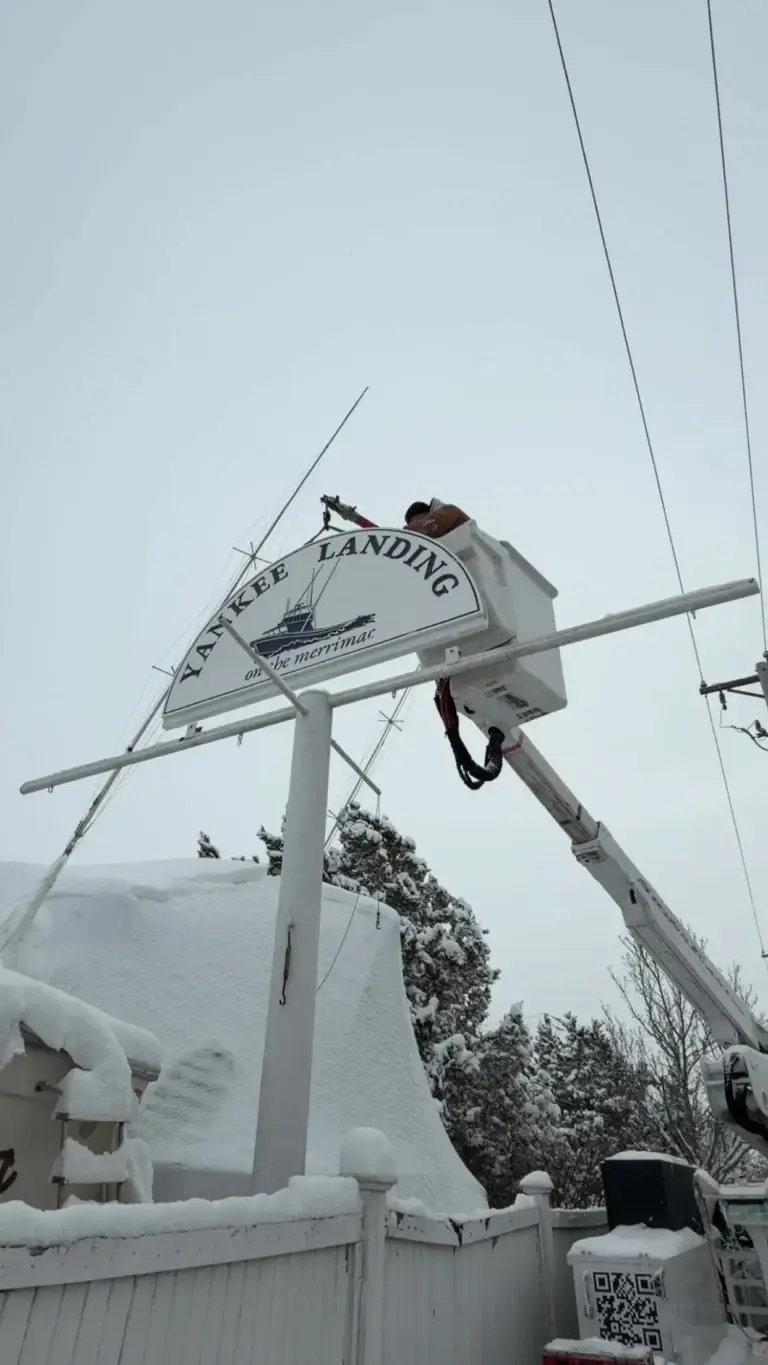
A site survey measures the actual wall, storefront, and building before anything gets fabricated. That in-person step prevents a common and costly mistake: forcing a stock sign size onto a space that needs custom dimensions. Wall graphics, channel letters, and monument signs all ride on precise measurements taken on site, not guessed from a floor plan or a phone photo.
For a rebrand across several locations, the risk is specific. A vendor who skips the site visit hands you signage that doesn’t fit, which means rework and a later opening. Accurate site plans are also a core part of the permit package, and those plans come straight from what the survey documents.
A good survey documents:
Exact wall and building dimensions for custom fabrication
Mounting surface and structural conditions
Access points that affect installation
The site details a permit reviewer needs to approve the plan the first time
Why does the survey matter for permitting?
Permit offices check your submitted plans against the real site. A survey that captures true wall dimensions, mounting surfaces, and structural details hands the reviewer accurate information up front, which cuts the back-and-forth that stalls approval.
How fast is sign permit turnaround in NH?
It depends on the town. The industry standard from permit to installation often runs past three months. That wait threatens a fixed opening while rent keeps draining. We built our process to close that gap, and it starts with picking up the phone. When you get a same-day reply instead of sitting in a queue for a week, the project moves into planning right away. Permit review is its own trackable phase, separate from submission. Knowing where your project sits in it lets you plan the build and staffing around that.
What happens after the permit is approved?
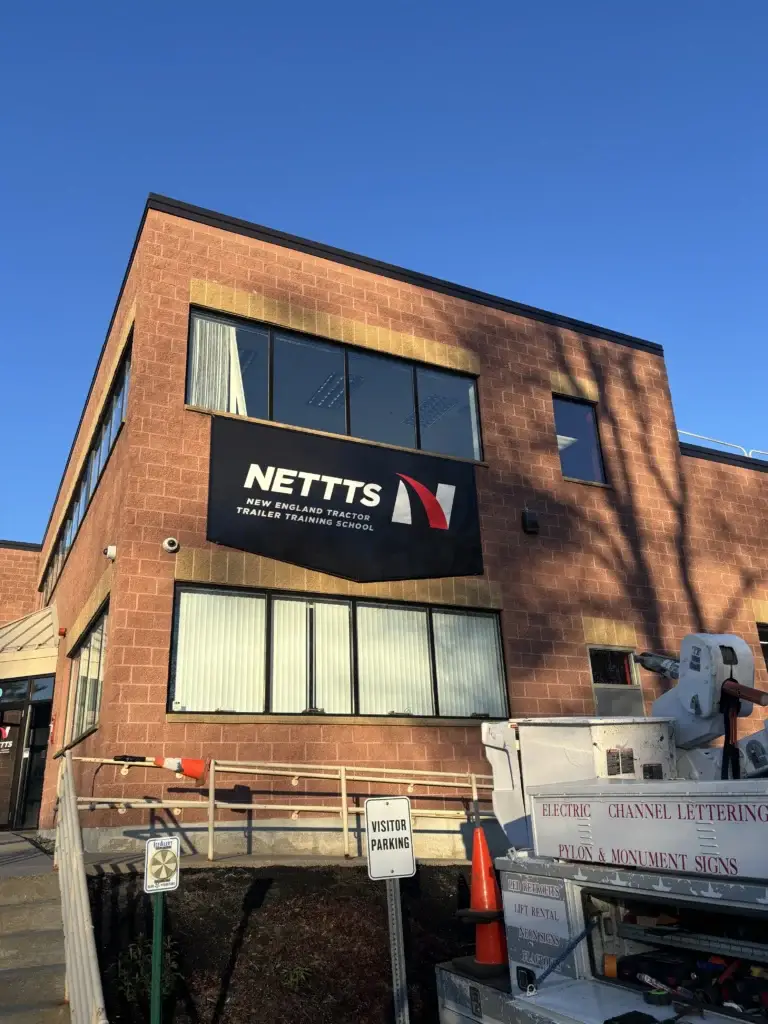
Approval does not put the sign up overnight. How fast production starts depends on who is building it and where. Our shop is right here in Kingston, NH, so fabrication starts quickly once a town signs off. Storefront signs and fleet graphics get built locally instead of shipped in from a distant plant. When you need a full corporate identity signage program rolled out across locations, building it in one shop keeps every sign consistent and on schedule.
Why does review timing differ between towns?
Every town enforces its own zoning and sign code, so timelines shift. Managing several locations, expect:
Faster review where the sign ordinance is straightforward
Longer holds where a variance or design review board is involved
Extra time when illuminated signs or monument signage draw more scrutiny
Tracking each phase on its own keeps a multi-site rollout on schedule.
How do you avoid sign permit delays?
Most delays trace back to three things. Mismatched code knowledge, a rotating cast of contacts, and applications started too late. Teams that skip a site survey before locking the design often submit plans that break local setback or size rules, which triggers a rejection and a resubmission that costs weeks.
Sign codes change from one town to the next. A channel letter package that clears one Rockingham County town can be flat-out prohibited in the next town over. That forces a redesign mid-project. Working across storefronts, contractors, and property managers in a lot of towns is how you learn those differences before an application ever hits a municipal desk.
Why does one point of contact matter?
Projects lose time when the application bounces between people, each needing a separate status update. Signs East is owner-operated, so one person manages both your side and the town’s side, from survey through installation. That continuity cuts the back-and-forth that stretches most permit timelines. Having one company handle design, permitting, and installation is the simplest way to keep a project moving.
When should permitting start?
The moment the location is secured, not after the crews show up. Wait until buildout begins and your sign approvals run one after another. Instead of moving alongside the architectural and utility permits, they pile delay straight onto the opening date.
For a multi-unit rollout, front-load two steps:
A commercial lease sign criteria review to confirm landlord size, placement, and design rules before you submit
Early jurisdiction research to confirm zoning and sign-code fit before the artwork is final
Do both and you avoid the permit delays that otherwise leave a leased storefront sitting dark while rent runs.
How does a lease sign criteria review protect a rebrand?
Lease exhibits set sign size, placement, and illumination long before a design reaches the landlord. A commercial lease sign criteria review catches conflicts between what the brand wants and what the property allows, before fabrication starts. Skip it and you invite rejected submittals, redesign costs, and an opening date that slips.
Landlord documents often point back to the town sign code instead of spelling out every rule. Since those codes vary so much, a design approved at one location can be prohibited at another. Matching the lease exhibit against current town rules protects owners rolling out several sites at once.
What if the lease criteria and town code conflict?
The landlord sets a ceiling and the town code sets the floor, and you have to satisfy both. When they disagree, the stricter one wins, which forces a redesign if the mismatch shows up late. Catch it during the review and you avoid rework after fabrication has started.
Why does regional coverage matter for a multi-site rollout?
Running locations across Southern NH, the Seacoast, and North Shore MA, you want a sign partner who knows that footprint firsthand. We cover the same territory for everything from storefront signs to flagpoles, so one crew can handle a rollout that crosses town and state lines.
A criteria review usually confirms:
Maximum sign area and height the lease allows
Illumination type permitted, whether internally lit, halo-lit, or non-illuminated
Placement rules relative to property lines and other tenants
That the landlord exhibit and the town code actually agree
Line these up early and the rebrand timeline holds, with no last-minute redesign scramble.
Permitting and site surveys are not busywork. They are the cheap insurance that protects your opening date and the money riding on it. Handle the code and the measurements before fabrication starts, and the costly delays that wreck grand openings mostly disappear. If you have a store opening or a rebrand coming up, call Signs East at (978) 818-1740 and we’ll map the permit path before you sign the lease.
FAQ
What causes most grand opening delays?
Sign permitting, not construction, is what usually pushes an opening past its date. Incomplete applications and vendors who don’t know the local process make it worse, and the delay can cost thousands per location in lost sales.
How does a site survey prevent permit rejections?
A site survey measures the exact wall, storefront, and building before fabrication, catching setback, height, and illumination conflicts early. That keeps you from forcing a stock sign size onto a space that needs custom dimensions.
Why does local permitting knowledge matter in NH?
Signs East works out of Kingston, NH, with direct familiarity with the town and county offices that handle approvals across Rockingham, Strafford, and Essex County. That regional knowledge shortens review cycles.