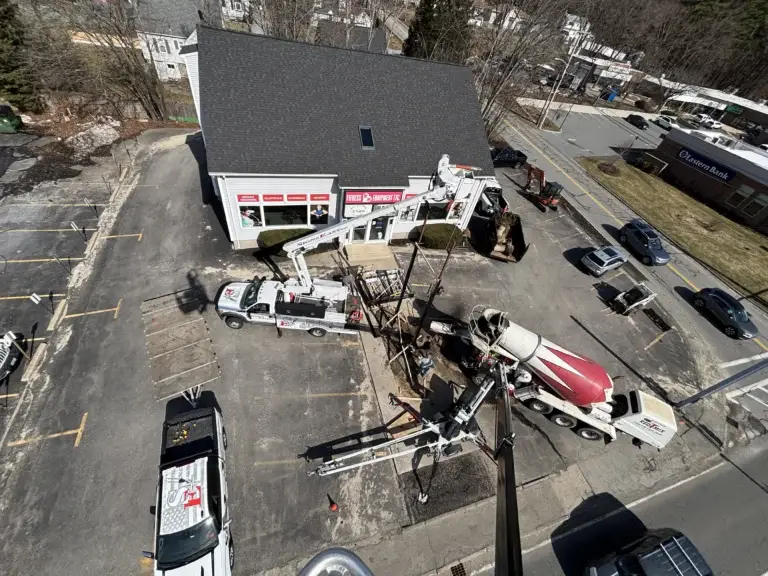
A replacement sign face usually costs less than a new lightbox cabinet and can refresh your storefront quickly when the cabinet itself is still sound. New faces are cut to fit your existing cabinet, so the frame, lighting and mounting stay in place. Full cabinet replacement makes sense only when the housing itself is damaged.
Tor Larson, owner of Signs East, sees this constantly in Seacoast strip malls. Many plazas use 2×8 ft lightbox cabinets, and when a tenant changes or rebrands, the cabinet often only needs a new Lexan face rather than a whole new sign.
What Is Lightbox Sign Face Replacement?
Lightbox sign face replacement swaps the old printed or painted panel inside your illuminated cabinet for a new one, without tearing out the cabinet itself. The frame, wiring, and structure stay put. Only the face changes, which cuts cost and downtime compared to a full sign rebuild.
This approach works because sign faces get made through a process using custom painting, full-color vinyl graphics, or a blank white finish ready for later branding. A polycarbonate sign face or acrylic panel gets shaped to match your cabinet exactly, then illuminated from behind once installed. illuminated signs get made through a process using custom painting, full-color vinyl graphics, or a blank white finish ready for later branding.
Does a Replacement Face Have to Match the Old Cabinet's Shape?
Yes. Replacement sign faces get custom made to fit the specific geometry of your existing box. That includes radius corners, oddball dimensions, track letter systems, and embossed detailing carried over from the original design. A property manager dealing with a decades-old monument or pylon sign does not need to guess at compatibility. The fabricator measures the cabinet and builds the panel to fit, whether it is a cabinet sign face replacement for a storefront or a lightbox sign face replacement for a larger pylon structure.
Who Handles This Kind of Repair Work?
Signs East, an owner-operated shop based in Kingston, NH, repairs cabinet, monument, and pylon signs across Southern New Hampshire, the Seacoast, and North Shore Massachusetts. Many of those jobs involve signs the shop did not originally build. Tor Larson has run the operation, giving commercial property owners one consistent point of contact rather than a rotating cast of subcontractors. That continuity matters when you are trying to match an aging cabinet’s exact specs years after installation.
How Does Cabinet Sign Face Replacement Work?
Cabinet sign face replacement swaps out the illuminated panel on your lightbox while the metal cabinet, wiring, and mounting structure stay in place. The process targets the visible face only, not the whole sign structure. That distinction matters because it keeps costs and timelines contained to a single component.
Before ordering a new face, check what is actually failing inside the box. LED components degrade over years of use, not all at once. You might notice dead modules scattered across the panel, dim patches near the edges, or colors that have drifted from their original white or blue tone. If any of these symptoms show up, the fix may involve LED retrofitting alongside the face swap, since illuminated cabinets and LED conversions fall under the same general service category as channel letters and monument signs.
Once the cabinet itself is confirmed sound, you choose a face style. Replacement sign faces typically come in two forms:
Apartment faces: standard construction, straightforward install
Pan-formed faces: molded with a slight curve for sturdiness, priced the same as apartment panels
Pan-formed panels hold up better against wind load and impact without adding cost, which makes them the more practical default for most storefronts.
How long does a lightbox sign face replacement take to produce?
Production timelines depend on the finish you select. A painted or printed polycarbonate sign face runs roughly 4 to 6 weeks to fabricate. A blank white panel, without custom graphics, takes about 2 weeks. Factor that lead time into any rebranding schedule before your old face fails completely.
What Makes a Polycarbonate Sign Face Durable?
Two materials do the heavy lifting in a durable cabinet face: printed vinyl and translucent polycarbonate. Fusing vinyl graphics to a polycarbonate sign face lets light pass through the panel evenly. The printed image glows from edge to edge once the cabinet lights switch on rather than showing hot spots or shadowed corners.
That construction method matters most for lightbox sign face replacement projects. The old face has yellowed or cracked but the housing underneath still works fine. Because backlit polycarbonate panels come in custom sizes, a fabricator cuts the new face to match the existing cabinet opening. No structural changes to the box, no new wiring, no new mounting hardware.
Apartment replacement panels lean on a different strength: impact resistance. Standard apartment sign faces use high-impact, UV-resistant sign-grade plastic rated at several times the strength of ordinary acrylic, which matters in coastal wind zones and along storm-exposed storefronts.
How long does a polycarbonate sign face last before it needs replacing?
Lifespan depends on UV exposure, coastal salt air, and how often the cabinet cycles on and off. UV-resistant, high-impact material resists yellowing and cracking far longer than standard acrylic, which is why property managers use it for cabinet sign face replacement on aging monument and pylon boxes.
Can you swap a cabinet face without replacing the whole sign?
Yes. Replacement sign faces are cut to custom dimensions, including radius corners and odd panel shapes. They drop into the current housing. A shop handling design, fabrication, and installation under one roof sizes and installs the new sign face replacement without pulling in separate vendors for the box, the wiring, and the panel itself.
When Should You Replace Instead of Rebuild?
A worn-out lightbox rarely needs a new cabinet. Updating the panel that holds your logo and graphics gives you the fastest path to a refreshed storefront. It leaves the cabinet structure, wiring, and mounting untouched. A sign face replacement addresses the part everyone actually looks at: the printed or painted surface, not the box behind it.
Full rebuilds make sense when the cabinet frame is bent, the housing has rusted through, or the electrical components have failed beyond repair. Short of that, refacing gets you most of the visual impact for a fraction of the disruption. Cabinet sign face replacement work swaps out the damaged or faded panel while the rest of the structure keeps doing its job.
How long does a replacement face actually last?
Plastic replacement faces hold their color and finish for years before another swap becomes necessary. That durability matters for property managers juggling multiple locations. Fewer replacement cycles mean fewer line items to budget for down the road.
What if the cabinet itself is still solid but the face looks dated?
That’s the clearest case for refacing over rebuilding. A lightbox sign face replacement updates branding, contact information, or color schemes without touching wiring or mounting hardware.
Before deciding, weigh these factors:
Cabinet condition: Cracks, rust, or warping point toward a rebuild; a faded or yellowed panel points toward a refacing job.
Material options: A polycarbonate sign face handles backlighting well and resists impact better than older acrylic panels.
Turnaround needs: Waiting months on a full sign order costs you visibility a face swap avoids entirely.
Shops with staying power matter here too. A company with an established track record in the region is worth checking before committing to any replacement sign faces project.
Who Should Handle a Sign Face Swap?
A contractor with design, fabrication, permitting, and installation under one roof handles a cabinet swap correctly. Coordinating three separate vendors for a single sign face replacement invites a missed deadline. Property managers juggling a permit office, a fabricator, and an installer often lose weeks to scheduling gaps alone.
Cabinet work in this region has to survive real weather swings and still get installed in a matter of weeks, not months. A shop that treats lightbox sign face replacement the same way it treats channel letters, monument signs, and LED retrofits. One coordinated job rather than three handoffs, gives you a single point of accountability. That matters when your storefront sits on a corridor where a dark or faded cabinet costs you foot traffic every day it stays broken.
Do you need a specialist for cabinet face replacement?
Not necessarily. A crew already fabricating and installing channel letters, monument signs, and illuminated cabinets in-house is positioned to run a cabinet sign face replacement the same way, using the same design, permitting, and installation process. Look for a shop that owns every step rather than subcontracting fabrication to one company and installation to another.
What should you ask before hiring a crew for replacement sign faces?
Ask whether design, fabrication, permitting, and installation happen under one team. Ask how the shop handles a polycarbonate sign face or vacuum-formed panel against seasonal temperature swings. A single accountable crew, not a chain of subcontractors, is what keeps your timeline intact.
FAQ
When does replacing the sign face make more sense than buying a new cabinet?
Replacement makes sense when the cabinet housing remains undamaged. Full cabinet replacement only becomes necessary when the housing itself sustains damage.
How long does lightbox sign face replacement take?
Blank white faces arrive ready in 2 weeks. Painted or printed faces take 4-6 weeks for production.
Which sign face type holds up well for storefronts?
Pan-formed faces, molded with a slight curve, resist wind load and impact better than apartment panels. They cost the same as apartment faces, making them the more practical default choice.
Conclusion
In closing, the decision between face replacement and new sign installation hinges on your facility’s operational requirements, budget constraints, and long-term signage strategy. Face replacement extends the life of existing infrastructure at lower cost when the cabinet structure remains sound. New installation provides an opportunity to upgrade technology, improve visibility, and align signage with current branding standards. Evaluate the condition of your existing framework, anticipated usage timeline, and visibility performance to determine which approach delivers superior value for your business objectives.