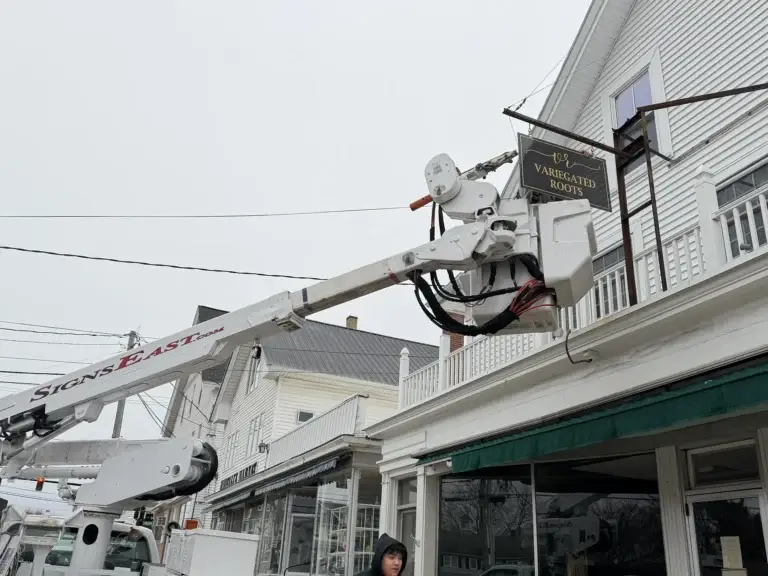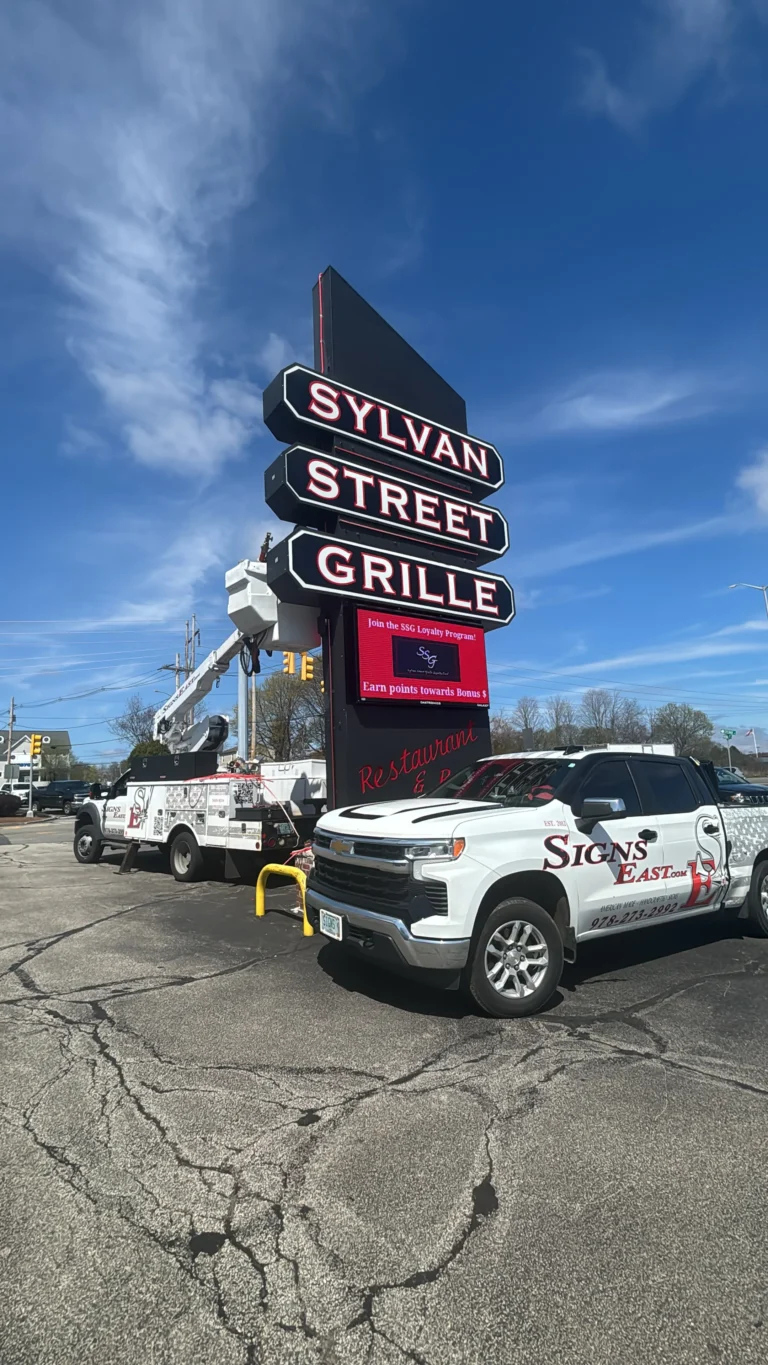
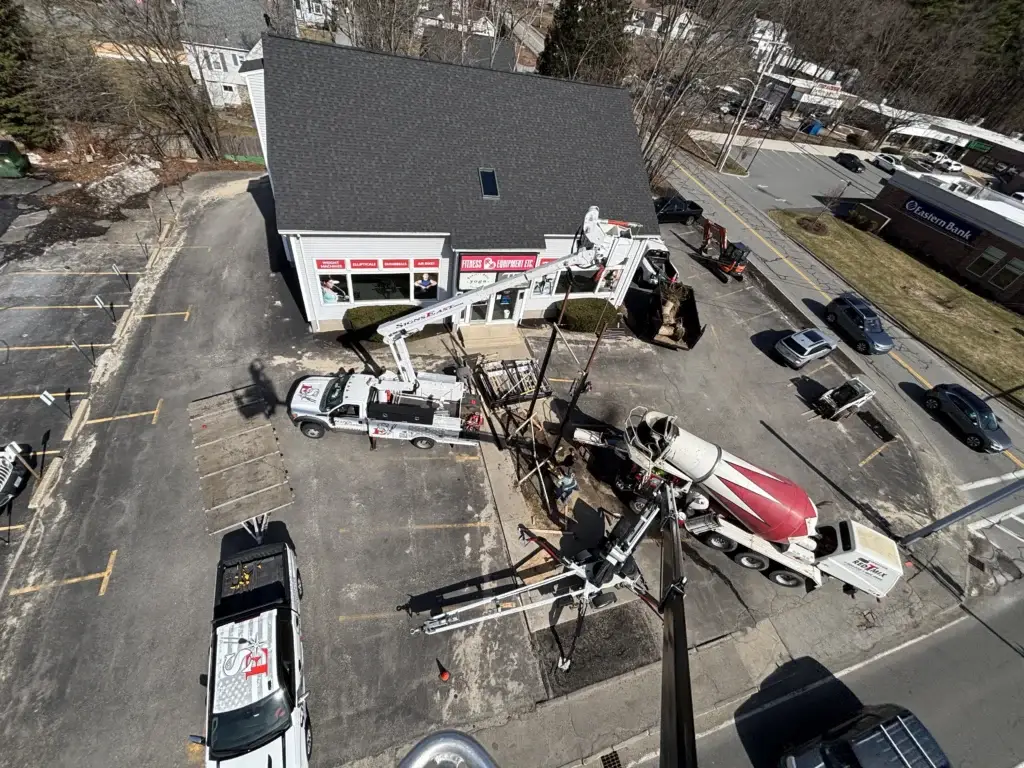
By Tor Larson, owner of Signs East LLC
Get it checked before the first hard freeze. Look at the mounting, the faces and seams, the lighting, and the base, while the weather still allows safe lift work. Winter does most of its damage to signs that went into the season with a loose bracket, an open seam, or old fluorescent lighting. Fixing those in October costs far less than a repair in January, when ice, short days and snowbanks make every job harder.
What does winter do to a business sign?
Water is behind most of it. Rain and melting snow get into open seams and around the faces, then freeze and expand overnight. After enough freeze-thaw cycles, a small gap becomes a cracked face or a cabinet full of rust.
Weight and wind come next. Ice and wet snow load up on cabinets, brackets and projecting signs, and a nor’easter pushes on a sign face like a sail. A bracket that flexed a little in September can let go in February.
Freestanding signs take their own beating. Road salt eats at steel poles and bases, and plows and snowblowers clip monument and pylon bases near driveways. Cold also changes how old lighting behaves. A fluorescent sign that lit fine in summer can come on dim, flicker or refuse to start on a cold night.
What should a pre-winter sign check cover?
A good pre-winter check looks at five things:
- Mounting. Brackets, bolts, welds and wall anchors, checking for rust, movement or cracking.
- Faces and seams. Cracks, gaps and failed seals where water can get in.
- Lighting. Dead or dim sections, flickering tubes and failing ballasts or neon transformers.
- Timers and photocells. Settings that need adjusting after the clocks change, so the sign comes on when it gets dark.
- Base and pole. Salt damage and plow strikes on freestanding signs.
Some of this you can spot from the parking lot. Our after-dark sign checklist shows what to look for once the sign is lit. The mounting and the inside of the cabinet need a crew on a lift.
Anything we find goes into the repair plan before the snow flies. That might mean resealing a seam, replacing a cracked face, tightening or replacing hardware, or fixing the lighting. Our commercial sign repair crew handles all of it, on signs we built and signs we didn’t.
Why do fluorescent signs struggle in the cold?
Fluorescent tubes are sensitive to temperature. On a cold night they can take longer to reach full brightness, and older ones may flicker or stay dim. That is why so many owners first notice a problem after the clocks change and the weather turns.
LEDs handle the cold well and come on at full brightness. If your cabinet is sound and the fluorescent lighting is the weak point, an LED retrofit before winter solves the cold-start problem and cuts the energy bill. Our illuminated signs team can tell you whether your sign is a good candidate.
When should you schedule winter sign repair?
Early fall is the best window, before the first hard freeze and the first real snow. Lift and bucket truck work is safer and quicker on dry ground. Once snowbanks line the parking lot and daylight runs short, the same repair takes longer and gets harder to schedule around the weather.
Most straightforward repairs, like reseals, new faces or hardware, don’t need a permit. Electrical work or changes to the sign’s structure can. We sort that out as part of the job.
What should you do if a storm damages your sign?
Keep people away from it first. A sign hanging from one bracket or a cabinet with exposed wiring is a safety hazard. If wires are down or sparking, call your utility or 911 before anyone goes near it.
Once it is safe, take photos from a few angles for your insurance company, then call for storm damage sign repair. One of our bigger repair jobs came from a business whose sign blew down in high wind. They had called several shops, and nobody else could take it on. Another customer referred them to us, and we got their sign back up.
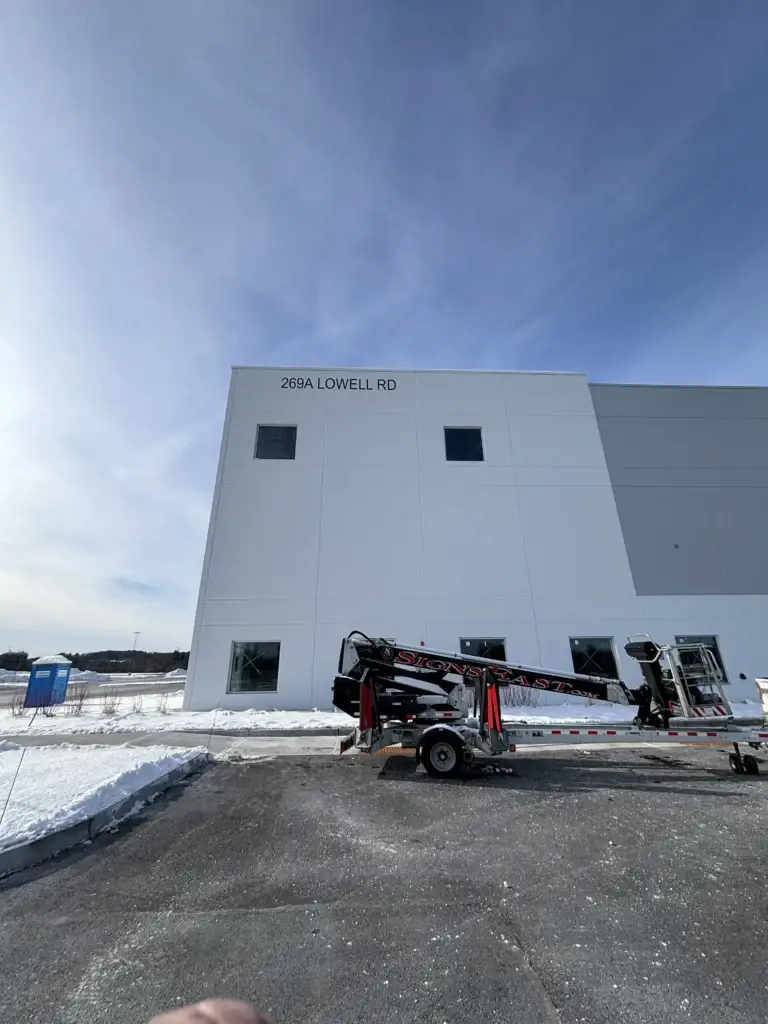
How does Signs East LLC handle winter sign repair?
Our own crew inspects the sign, puts the repair plan in writing, and does the work. There’s no handoff to a separate installer. We repair signs of any brand, from storefront cabinets and channel letters to pylons and monuments. We work from our Kingston shop at 34 Route 125 and our Seabrook office at 563 Lafayette Rd, Unit 2, and serve businesses across Southern New Hampshire, the Seacoast and North Shore Massachusetts.
Common questions about winter sign maintenance
Can a sign be repaired in the winter?
Yes, most repairs can be done in winter, and urgent damage can’t wait for spring. Ice, snowbanks and short days can slow the work, so non-urgent repairs are easier to schedule in the fall.
Some work depends on the weather more than others. Outdoor vinyl graphics need the surface and the air warm enough for the adhesive to bond, and new concrete footings depend on ground conditions, so those jobs can shift on cold weeks. Vehicle wraps are not affected, because we install them in our heated bay year-round.
Should I replace a cracked face now or wait until spring?
Replace it now. A cracked face lets in water, and every freeze-thaw cycle makes the crack bigger and puts the lighting and wiring inside at risk.
Get Your Sign Ready Before the First Freeze
Send us a photo of your sign in daylight and one at night, along with the property address. We will look it over, tell you what needs attention before winter, and put the work in writing. Request a quote to book your pre-winter check.