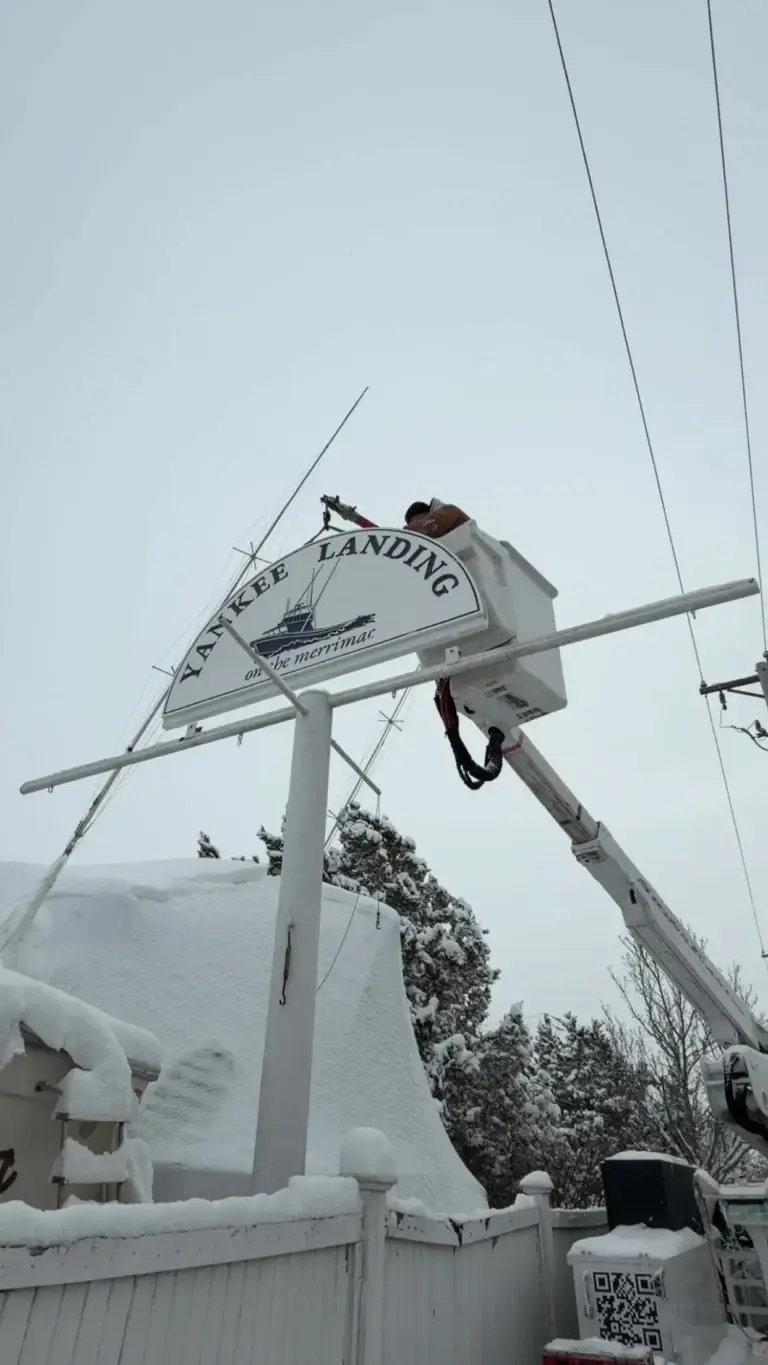

What Really Happens During a Commercial Sign Installation
A new storefront sign or monument display looks simple from the parking lot. Getting it up there safely is not. Between permits, wiring, wind load, and inspections, a commercial sign installation has a dozen places where a corner-cutting crew can leave you with a fine, a failed inspection, or a sign that quits after one New England winter. This is what the process actually looks like when it is done right, and what to check before you hire anyone to do it.
Key Takeaways
Illuminated signs are wired to the National Electrical Code (NEC Article 600). Grounding and connections are safety work, not an afterthought.
A good installer pulls the permits and coordinates the inspection instead of leaving that on you.
Mounting has to hold up to New England wind and snow load, whether it bolts to a wall or sits on a poured foundation.
One shop handling design, fabrication, and install means nobody points fingers when there is a problem.
Illuminated signs are wired to the National Electrical Code (NEC Article 600). Grounding and connections are safety work, not an afterthought.
A good installer pulls the permits and coordinates the inspection instead of leaving that on you.
Mounting has to hold up to New England wind and snow load, whether it bolts to a wall or sits on a poured foundation.
One shop handling design, fabrication, and install means nobody points fingers when there is a problem.
Why does it matter who installs your sign?
Plenty of outfits will hang a sign and cash the check. Fewer will still answer the phone when a connection fails eight months later. That gap is the whole reason to vet an installer before the contract gets signed. A cheap install that fails inspection or shorts out costs you more than doing it right the first time, once on the repair and again on the downtime while your sign sits dark.
Signs East has been building and installing signs out of Kingston, NH since 2012. We started with twenty dollars and built the shop one customer at a time, and the work is done in house, not farmed out to a subcontractor you never meet. When you hire us for commercial sign installation, the same team designs it, fabricates it, and mounts it. Neon, LED, channel letters, cabinets, monument signs, pylon signs, across Southern New Hampshire, the Seacoast, and North Shore Massachusetts.
What should you check before you sign an installation contract?
Start with insurance. A crew working on your building at height, running electrical, should carry full coverage, and that protects you if something gets damaged during or after the job. Signs East is fully insured. Ask for proof, and be wary of anyone who hesitates.
Then ask about the region. Codes, weather, and permit rules change from one town to the next in New Hampshire. An installer who has worked here for years already knows what Kingston, Exeter, or Manchester will ask for. We have handled that paperwork since 2012, and it shows up as fewer surprises on your schedule.
If you are searching for a licensed sign installer in NH, look past the word “licensed” and confirm the things that actually protect you: proof of insurance, real local references, and a crew that pulls permits and meets code. Those three checks separate a shop built to stand behind its work from one that disappears after the invoice clears.
What happens before install day?
The work that keeps a project on schedule happens before any truck shows up. It starts with a site survey. Skip it and you invite the expensive surprises later: a permit that does not match the sign, a foundation that cannot carry the weight, a blocked sightline nobody caught.
A site survey checks a few things on the ground:
Whether the wall, pole, or foundation can actually hold the sign
Sightlines from the road, the lot, and the sidewalk
Existing power, conduit, and where the electrical ties in
Local zoning limits and what the permit will require
Whether the wall, pole, or foundation can actually hold the sign
Sightlines from the road, the lot, and the sidewalk
Existing power, conduit, and where the electrical ties in
Local zoning limits and what the permit will require
This is also where one shop beats a pile of separate vendors. When the same team designs, permits, and installs, there is no design firm blaming the fabricator and no fabricator blaming the installer when a date slips. You get one point of contact and one crew that owns the whole job.
Timing is the other piece. A lot of sign shops leave commercial clients waiting three months or longer to see a finished project. We work around the clock to keep storefront openings and fleet rollouts on the date you planned, because a late sign is a late grand opening.
How do crews handle the electrical side?
Every lit sign is an electrical system first and a marketing piece second. It has wiring, transformers, and load that all have to be handled to code, or it becomes a hazard on your wall. That standard runs from the first conduit to the last connection, and it is the core of channel letter installation safety.
The rulebook is the National Electrical Code, published by the National Fire Protection Association. Article 600 covers signs specifically: wiring, grounding, and where the disconnect goes. Inspectors work straight from it, so anything missed on install day turns into a delay. Getting the wiring, grounding, and disconnect right the first time is what keeps an illuminated sign passing inspection and running for years.
What about maintenance after the sign is lit?
Wiring and weather wear on a sign over time. Ongoing service usually means:
Chasing down dead LED modules and dim spots on channel letters
Fixing color drift on illuminated faces
Converting old neon or fluorescent cabinets to LED for steadier light and lower cost
Keeping backlit cabinets bright around the clock
Chasing down dead LED modules and dim spots on channel letters
Fixing color drift on illuminated faces
Converting old neon or fluorescent cabinets to LED for steadier light and lower cost
Keeping backlit cabinets bright around the clock
We also handle sign repair on signs we did not build, including LED retrofits on aging neon and fluorescent cabinets. Instead of putting you on a months-long waitlist, we get out there and get it lit again.
What does a monument sign foundation need?
A monument sign foundation installation calls for a poured concrete base built to anchor a ground-level sign at an office park, retail center, or professional building. Soil, frost depth, and local wind-load rules set the footing size before anyone starts fabricating. Rush that step and you end up with a leaning cabinet, cracked concrete, or a sign that fails inspection months later.
A qualified crew surveys the site, checks utility lines, and pulls the right permits before excavation. Unpermitted footings can trigger a stop-work order and a costly redo, so confirming your installer handles permitting is worth the ten-minute conversation up front.
How is foundation work different from wall-mounted signs?
Monument foundations deal with soil bearing and frost heave. Wall-mounted channel letters deal with anchoring, electrical grounding, and fall protection for the crew working up high. Both come down to the same thing: structure that holds through freeze-thaw cycles without shifting or loosening. A base done right protects the sign’s look and its lifespan against years of New England weather.
What happens after the sign goes up?
Install day is the start of the relationship, not the end of it. Fleet vehicles go back to work, the storefront opens on schedule, and the sign starts earning its keep. What separates a real shop from a one-and-done crew is what happens after.
At Signs East, the phone line stays open after the last bolt. You talk to the owner, not a call center, and that holds for every job, whether it was an illuminated storefront sign or a monument sign foundation installation for a ground-level display. If a sign we built acts up down the road, we come back and fix it.
Our customers back that up. Signs East has crossed 100 five-star Google reviews from businesses across New Hampshire and Massachusetts, and most of them mention the same things: we show up, we communicate, and we finish. That is the part you cannot see from the parking lot.
Working with a local crew
Signage is one of those jobs where being close by matters. We install and service signs throughout Southern NH, the Seacoast, and North Shore MA, and we regularly handle sign installation in Manchester, NH and the surrounding towns. When a sign goes dark or a grand opening is on the line, you want a crew that can be there, not one routing your call through a franchise.
A commercial sign installation runs on the same handful of things done right: a real site survey, code-compliant wiring, mounting that holds, and permits pulled before the work starts. Get those right and your sign runs safely for years. Cut corners on any of them and you pay for it later. If you have a project coming up, call Signs East at (978) 818-1740 and talk it through with the people who will actually do the work.
FAQ
What safety standards apply during commercial sign installation?
Illuminated signs are wired to NEC Article 600, and mounting is built for local wind and snow load. Permits and a final inspection confirm the work meets code before the sign is switched on.
What should a business check before signing an installation contract?
Confirm the installer is fully insured and has real experience in your area. Signs East is fully insured and has served New Hampshire and Massachusetts businesses since 2012.
How long does a commercial sign installation take?
It depends on permitting and the type of sign, but many shops leave clients waiting three months or more. Signs East works continuously toward your date to keep openings and rollouts on schedule.
Will you repair a sign your shop did not install?
Yes. We repair signs built by other shops, including LED retrofits on old neon and fluorescent cabinets, and we move fast instead of putting you on a waitlist.