For a lot of New Hampshire business owners, the hardest part of getting a new sign is not the design or the install. It is the permit. Rules change from town to town, fees are not always spelled out, and a missed step can stall a project for weeks. That permit confusion, and the hidden permit fees that come with it, is exactly what this guide is built to clear up. At Signs East, we deal with local sign codes every week, and we wrote this so you know what to expect before you commit to anything.
Why are sign permits in New Hampshire so confusing?
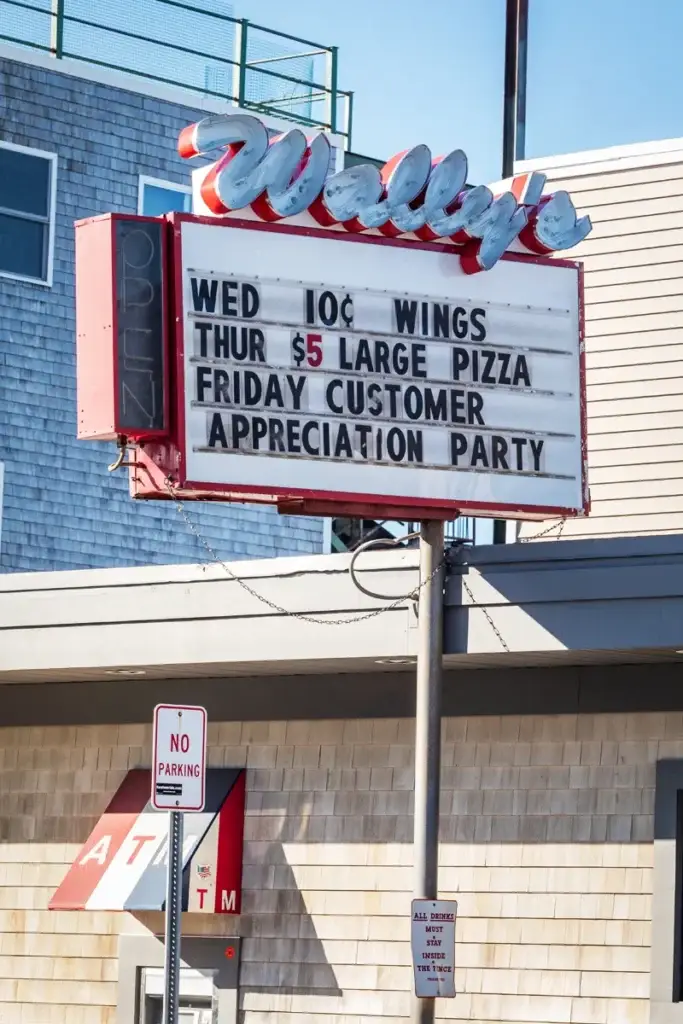
New Hampshire does not run sign permitting at the state level. Each town and city sets and enforces its own rules. A sign that gets a quick approval in one town can trigger a full zoning review in the next one over. Setbacks, size caps, lighting rules, and the application itself all depend on where your business sits. If you do not know the local code going in, you can end up with delays or a sign that has to be changed after it is already up.
What does the sign permit process look like?
The steps vary by municipality, but most follow the same path:
- Research the local rules. Each town enforces its own code, so checking the specific sign rules early keeps you from costly revisions or a denial.
- Prepare your application and documents. Pull together your design plans, a site plan, and the required fees. Missing pieces are the most common cause of delays.
- Submit to the right office. This is usually the town building or planning department. Track the status so you can answer any follow-up questions fast.
- Wait for review and approval. Timelines differ by town and project size. A complete, accurate submission is the best way to keep it moving.
- Pass the inspection. After approval, an inspection confirms the installed sign matches what was approved.
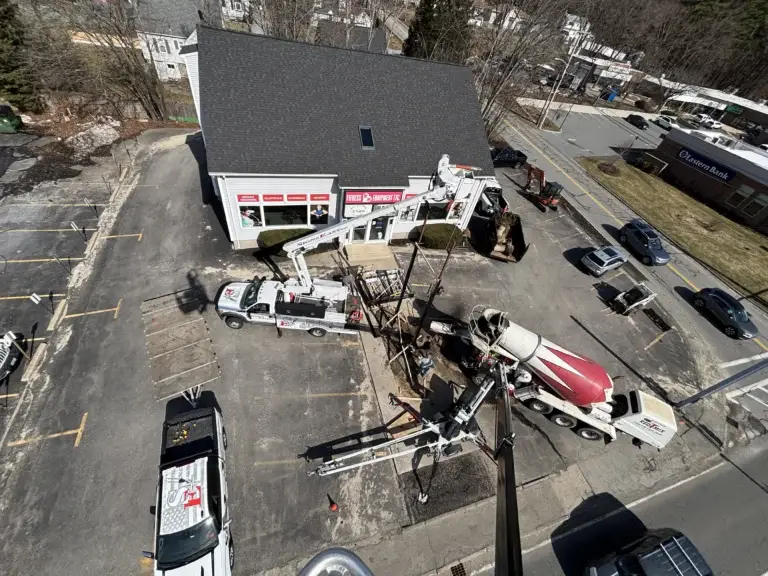
Working with an installer who already knows the local quirks cuts down the back-and-forth. Signs East handles design, fabrication, and installation for everything from pole and pylon signs to monument signs and illuminated signs, and we factor permitting into the timeline instead of leaving it on you.

What documents do you need for a sign permit?
A clean, complete application is what keeps your project on schedule. Most towns ask for:
- Completed application form. Filled out fully and matched to that town's version.
- Design plans. Drawings or renderings showing dimensions, materials, color, and placement.
- Site plan. Where the sign sits on the property, with property lines and nearby structures marked.
- Proof of payment. Receipts for permit fees, so nothing stalls in processing.

What do New Hampshire towns actually regulate?
Exact limits are set locally, so the numbers shift from town to town. What stays consistent is the type of rules you will run into. Here is what towns typically control:
| What towns regulate | What it usually covers |
|---|---|
| Size and height | Maximum square footage and height, often tied to the sign type and the zoning district. |
| Illumination | Whether lit, internally illuminated, or digital signs are allowed, plus brightness limits. |
| Placement and setbacks | How far a sign must sit from property lines, roads, and driver sight lines. |
| Temporary signs | How long banners and temporary signs can stay up before they have to come down. |
| Safety and content | Limits on flashing or animated elements that can distract drivers. |
Treat any specific number you read online as a starting point, not a final answer. Always confirm the current limits with the town your project is in before you finalize a design.
What does a sign permit cost?
Permit costs are where line-item transparency matters most, because this is where hidden permit fees tend to hide. Amounts vary by municipality and sign type, but the cost is usually built from a few common pieces:
- Application fee. Covers administrative processing. The amount depends on the town and often the sign's size or type.
- Inspection fee. Charged for the review or the post-install inspection.
- Renewal or extension fee. Applies when a permit needs more time or a temporary sign runs long.
- Variance fee. Applies if your sign needs an exception from the local zoning rules.
Before you sign off on anything, ask for a line-item breakdown so every fee is on the table up front. That is the simplest way to avoid a surprise charge halfway through.
How do sign rules differ by town in Southern New Hampshire?
Each town sets its own size, lighting and approval rules, and the gaps between neighbors are bigger than most owners expect. The details below come from each town's posted ordinance, checked in October 2026, for the towns where we work most. Offices, forms and fees change, so confirm the current details with the town before you apply.
| Town | Who issues the permit | Wall signs (main commercial districts) | Freestanding signs | Lighting |
|---|---|---|---|---|
| Kingston | Building Inspector, or the Planning Board during site plan review | 10% of the wall, up to 500 sq ft total | One per lot, up to 25 ft high and 80 sq ft | Internal or external, LED allowed, no animation |
| Plaistow | Department of Building Safety | Two signs per business, 10% of a facade combined | Shared center sign up to 150 sq ft and 25 ft high | Digital signs banned; lit signs must be UL listed |
| Salem | Building Department | 2.5 sq ft per linear foot of building, or 1.5 with a freestanding sign | Up to 20 ft high and 100 sq ft, count set by frontage | No electronic reader boards except by conditional use permit |
Kingston, NH
Sign permits in Kingston go through the town's Building Inspector and Code Enforcement office at Town Hall, 163 Main Street, Kingston, NH 03848. You can reach the office at (603) 642-3342 ext. 119. A business going through Planning Board site plan review gets its sign permit inside that review instead. Signs in the Historic Districts also follow Article 102.6 of the zoning ordinance. The town fee schedule lists a sign permit at $50 minimum or $25 per sign.
- Building signs: up to 10% of the wall area in the Commercial (CI, CII, CIII) and Industrial districts, with a 500 sq ft total. Rural Residential lots on Route 125 follow the commercial limits.
- Freestanding signs: one per lot, up to 25 ft high and 80 sq ft, set back 10 ft from the front line and 25 ft from the side. The Historic districts allow 12 ft and 24 sq ft.
- Lighting: internal and external lighting are both allowed in commercial and industrial districts, and LEDs are allowed for either. Historic and residential districts allow external lighting only. Changeable text can change once every 12 hours, and computer-animated signs are not allowed.
- Street numbers: commercial and industrial signs must show the street number, sized for the speed of the road.
In Kingston, any change in sign lighting needs review. An LED retrofit or a switch from external to internal lighting is a permit conversation, not only an electrical job. New copy on an existing sign does not need review unless the sign grows or the lighting changes. The Board of Adjustment can grant slight variances. Source: Kingston Article 303, Sign Ordinance.
Kingston is our home base, so our work on custom signs in Kingston, NH starts with a code we know well.
Plaistow, NH
Plaistow handles signs through its Department of Building Safety at 145 Main Street, Plaistow, NH 03865, reachable at (603) 382-5200 ext. 259. Every regulated sign needs a permit in every district. The permanent sign application costs $50 per sign and asks for the artwork with dimensions, a facade sketch with the glass dimensions for attached signs, and the property owner's written permission. Lit signs need an electrical permit pulled by a master electrician, and internally lit signs must be UL listed. Temporary signs and banners have their own forms.
- Attached signs: in the C1 and Industrial districts, up to two per business. On one facade they share 10% of it; on two facades, one can use 10% and the other 5%. Facade area is measured roofline to foundation, minus the glass.
- Freestanding signs: in C1 and Industrial, these are for centers and industrial parks with two or more businesses, as one shared sign up to 150 sq ft and 25 ft high. A single business on its own lot may be granted a smaller one. Freestanding signs carry the street number and name at the top.
- Main Street (C2 and Village Center): one wood sign per lot, up to 15 sq ft, lit indirectly.
- Lighting: digital signs are prohibited in every district, along with animated, flashing and intensely lit signs. The only changeable copy allowed is a manual reader board.
Franchise signs that do not meet the ordinance need a special exception from the Zoning Board of Adjustment, along with a copy of the franchise requirement. The ZBA generally meets the last Thursday of the month, with applications due about two weeks ahead. Source: Plaistow Zoning Ordinance, Article IX.
Salem, NH
Salem's Building Department issues sign permits for erecting, replacing, rebuilding or moving a sign; repair and maintenance do not need one. The application asks for photos or drawings of the existing and proposed signs, setbacks to the property lines, whether the property is in the Historic District, and whether an electrical permit is needed. A sign shown on an approved site plan cannot change without Planning Board approval, unless the change is only a tenant name or makes the sign less prominent.
- Wall signs: in the CI-B and CI-C districts, 2.5 sq ft per linear foot of building when the wall sign is the only sign on the lot, or 1.5 when it shares the lot with a freestanding sign. All wall and canopy signs on a lot must match in size, shape, color and style, logos aside.
- Freestanding signs: up to 20 ft high and 100 sq ft, or 1 sq ft per linear foot of frontage if that is less, set back 20 ft from the right-of-way. Lots under 600 ft of frontage get one; 600 to 899 ft get two; 900 ft or more get three, spaced at least 300 ft apart. The street address and plaza name must appear on the sign.
- Lighting: electronic reader boards and electronic changeable copy are prohibited, except static gas price signs and drive-through screens approved by conditional use permit. A sign visible from a home cannot be lit from 11 p.m. to 7 a.m. unless the business is open. In the Depot Village Overlay, lighting must be external, and neon, fluorescent and LED lighting are not allowed.
When a sign does not fit the table, Salem's Planning Board can adjust the requirements in limited ways by conditional use permit. Applications are due 21 days before a meeting, and the board meets the second and fourth Tuesday of the month. Salem does not publish a sign permit fee. Source: Salem Chapter 490 Zoning, Section 490-702. See our work on signs in Salem, NH.
What do these towns have in common?
- Lighting changes count. Adding light, switching to internal lighting or retrofitting to LED can bring sign review as well as an electrical permit. Our sign repair and LED retrofit team checks the town rule before scoping the work.
- Electronic message signs are tightly limited. Plaistow bans them, Salem allows only narrow exceptions, and Kingston limits changeable text to one change every 12 hours. Check before committing to a digital readerboard.
- Lit channel letters fit the commercial districts. Internally lit and LED channel letter signs are allowed in the main commercial districts of all three towns, inside each town's size limits.
- Street addresses go on the sign. All three towns require the street number on freestanding or commercial signs.
Exeter, NH
Exeter's Building Department, at the Town Office at 10 Front Street, Exeter, NH 03833, manages sign permits and has a dedicated sign permit application. Call (603) 773-6112 to confirm what your sign needs.
Portsmouth, NH
In Portsmouth, sign rules live in Article 12 of the city's Zoning Ordinance, and the Planning Department answers sign permit questions at (603) 610-7216, City Hall, 1 Junkins Avenue, Portsmouth, NH 03801. If your sign sits in the downtown Historic District, expect an added review step, so build that into your schedule early.
North Hampton, NH
North Hampton runs sign permits through its Building Department at 237A Atlantic Avenue, North Hampton, NH 03862, reachable at (603) 964-8650. The town uses a sign permit supplement form alongside the standard building permit application, so confirm both are filled out.
Fee schedules differ by town and often by sign type and size. Confirm the current fee, the right form, and any inspection steps with the office before you finalize your design, or let us coordinate it as part of your project.
How do you avoid permit confusion?
Permit confusion stalls projects and inflates costs. A few habits keep it from happening:
- Start early. Talk to the local building or planning office at the very start of the project.
- Work with people who know the codes. An experienced local sign company understands the municipal rules and the people enforcing them.
- Submit a complete application. Double-check every document and fee before you send it in.
- Ask questions. Request specifics on your application status and any town code you are unsure about.
- Track every cost. Keep a running list of permit-related fees so nothing unexpected slips through.
Frequently asked questions about sign permits and installation
In most New Hampshire towns, yes. Permanent business signs almost always need a permit, and many temporary signs do too. Because the rules are set locally, the safest move is to check with the town your business is in before you finalize a design. A local sign company can tell you quickly whether your sign needs one.
It depends on the town and on what changes. Kingston does not require review for new copy on an existing sign unless the sign gets bigger or the lighting changes. Salem exempts repair and maintenance but requires a permit to replace a sign. Plaistow treats any new or replacement sign as a new permit.
Rarely without limits. Plaistow prohibits digital signs. Salem prohibits electronic reader boards except static gas price signs and drive-through screens approved by conditional use permit. Kingston allows changeable text that changes no more than once every 12 hours and bans computer animation.
It depends on the town and the sign. Most permit costs are built from an application fee, possible inspection fees, and extra fees if you need a renewal or a zoning variance. Amounts vary widely between municipalities, so ask the town, or your sign company, for a line-item breakdown so every fee is clear before you commit.
Timelines vary by town and by how complex the project is. A complete, accurate application is the biggest factor in how fast it moves. Missing documents or fees are the most common reason a permit gets delayed, so getting the submission right the first time keeps your project on schedule.
A town can require a non-permitted sign to be modified or taken down, and applying after the work is done can push your timeline back by weeks. It usually costs more to fix than to do it right the first time. Handling the permit before installation protects your investment and keeps the project on track.
Yes. We are an owner-operated sign company that handles design, fabrication, and installation under one roof, so permit coordination fits into the project timeline instead of becoming one more thing you have to manage. If you want help with a sign project in New Hampshire or North Shore Massachusetts, get in touch with us and we will walk you through it.
Planning a sign in New Hampshire?
Talk to a local team that handles the permit side along with the build.
Request a Quote Call (978) 818-1740