
The Complete Guide to NH Sign Permit Process: Navigating New Hampshire Sign Regulations for Business and Outdoor Signage
Navigating the sign permit process in New Hampshire can be a complex task for business owners and organizations looking to establish their presence through effective signage. This comprehensive guide aims to demystify the requirements and regulations surrounding sign permits in the state. Readers will learn about the essential steps involved in obtaining a sign permit, the key regulations that govern signage, and the specific requirements for business and outdoor signage. Understanding these elements is crucial for ensuring compliance and maximizing visibility in a competitive market. This article will cover the sign permit process, key regulations, requirements for business signage, and guidelines for outdoor signage, providing a clear roadmap for businesses in New Hampshire.
NH Sign Permit Process: Business & Outdoor Sign Regulations
The sign permit process in New Hampshire involves several critical steps that ensure compliance with local regulations. First, it is essential to research local regulations, as these can vary significantly between municipalities. Next, businesses must prepare their application, which includes detailed plans and specifications for the proposed signage. Finally, the completed application must be submitted to the appropriate local authority for review and approval. Understanding this process is vital for businesses to avoid delays and ensure their signage meets all necessary requirements.
Key Regulations
Key regulations governing sign permits in New Hampshire include size restrictions, sign placement, and content restrictions. These regulations are designed to maintain aesthetic standards and ensure public safety. For instance, many municipalities impose limits on the height and area of signs, as well as guidelines on where signs can be placed to avoid obstructing views or creating hazards. Additionally, content restrictions may apply, particularly concerning the use of certain images or language that could be deemed inappropriate or misleading.
Requirements for Business Signage

Obtaining a business sign permit in New Hampshire requires adherence to specific requirements that vary by municipality. These requirements typically include application details, permit fees, and compliance with local ordinances. Understanding these elements is crucial for businesses to ensure their signage is legally compliant and effectively communicates their brand.
What Are the Key Requirements for Business Signage Rules in NH?
In New Hampshire, key requirements for business signage include obtaining the necessary permits before installation, adhering to size restrictions set by local ordinances, and following placement guidelines to ensure visibility without obstructing public pathways. Businesses must also ensure that their signage complies with any additional local regulations that may apply.
Which Signs Require Permits Under New Hampshire Municipal Sign Codes?
Under New Hampshire municipal sign codes, several types of signs require permits, including:
- Freestanding Signs: These are standalone structures that are not attached to any building and often require specific permits due to their size and placement. Learn more about monument signs and pole and pylon signs.
- Wall-Mounted Signs: Signs affixed to the exterior of a building typically require permits to ensure they meet local aesthetic and safety standards. Explore options for dimensional and channel lettering.
- Illuminated Signs: Signs that are lit from within or externally often have additional regulations regarding brightness and placement to minimize light pollution. See details on illuminated signs.
Guidelines for Outdoor Signage
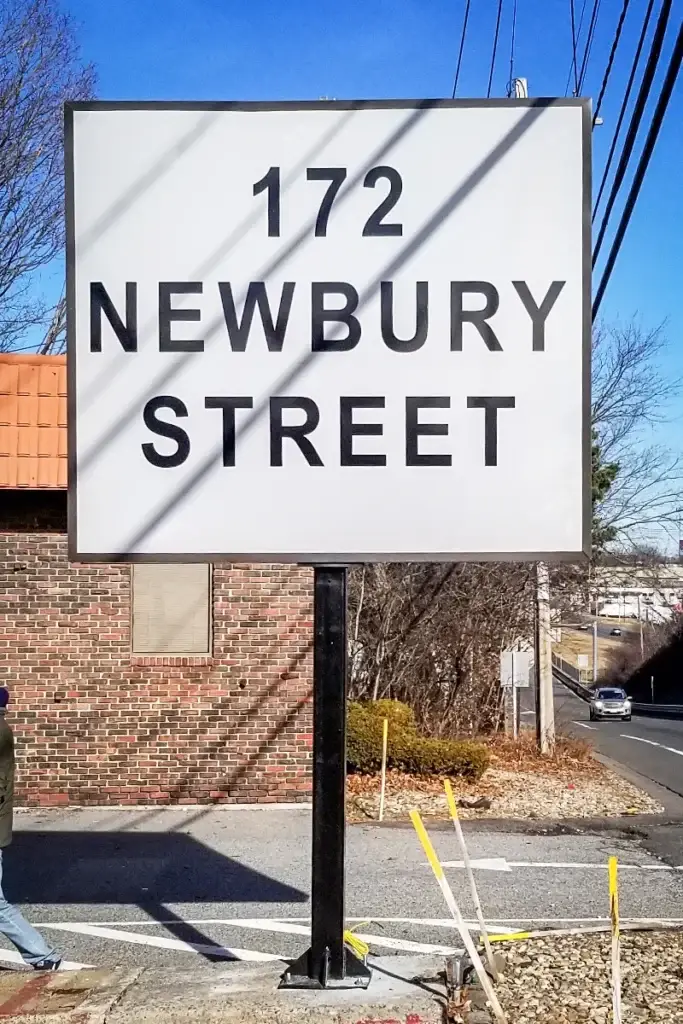
When designing and maintaining outdoor signage, businesses should follow best practices to ensure compliance and effectiveness. Key considerations include design elements that align with local regulations, the types of signage that are permissible, and ongoing maintenance to keep signs in good condition. Properly designed outdoor signage not only enhances visibility but also contributes to the overall branding of a business. For assistance with corporate branding, see corporate identity services.
How to Apply for Outdoor Sign Permits in New Hampshire: Step-by-Step Process
Applying for outdoor sign permits in New Hampshire involves a systematic approach:
- Research Local Regulations: Understand the specific requirements and restrictions in your municipality.
- Prepare Your Application: Gather necessary documents, including design plans and specifications.
- Submit Your Application: Present your application to the local authority for review.
This structured approach helps ensure that all necessary steps are taken to secure the required permits.
What Documents and Forms Are Needed for NH Sign Permit Applications?
To apply for a sign permit in New Hampshire, businesses typically need to provide several documents, including:
- Completed Application Form: This form includes details about the proposed signage.
- Design Plans: Detailed drawings that illustrate the sign’s dimensions, materials, and placement.
- Site Plan: A layout showing the sign’s location in relation to the property and surrounding area.
These documents are essential for the review process and help local authorities assess compliance with regulations.
How Do Digital and Paper Permit Applications Differ in NH?
In New Hampshire, digital and paper permit applications may differ in terms of submission methods and processing times. Digital applications often allow for quicker processing and easier tracking of application status, while paper applications may require additional time for review and approval. Understanding these differences can help businesses choose the most efficient method for their needs.
What Are the Fees, Renewals, and Compliance Inspections for NH Sign Permits?
Fees for sign permits in New Hampshire can vary based on the type and size of the sign. Additionally, businesses should be aware of renewal requirements, as some permits may need to be renewed periodically. Compliance inspections are also a critical part of the process, ensuring that installed signage adheres to the approved plans and local regulations.
How Are Permit Fees Calculated and When Are Renewals Required?
Permit fees are typically calculated based on the size and type of the sign, with larger or more complex signs incurring higher fees. Renewals are generally required every few years, depending on local regulations, and businesses should keep track of their permit status to avoid penalties.
What Does the NH Sign Permit Inspection and Compliance Process Involve?
The inspection and compliance process for sign permits in New Hampshire involves a review of the installed signage to ensure it matches the approved plans and complies with local regulations. Inspectors will assess factors such as placement, size, and overall safety. This process is crucial for maintaining community standards and ensuring public safety.
How Do Local Ordinances Affect Sign Permits Across New Hampshire Municipalities?
Local ordinances play a significant role in shaping the sign permit process across New Hampshire municipalities. Each municipality may have its own set of rules regarding sign size, placement, and design, which can lead to variations in the permit process. Businesses must familiarize themselves with the specific ordinances in their area to ensure compliance.
What Are the Variations in Sign Regulations Among NH Municipalities?
Variations in sign regulations among New Hampshire municipalities can include differences in allowable sign types, size restrictions, and placement guidelines. For example, some towns may allow larger freestanding signs, while others may impose stricter limits. Understanding these variations is essential for businesses to navigate the permit process effectively.
Where Can Businesses Find Updated NH Municipal Sign Codes for 2024-2026?
Businesses can find updated New Hampshire municipal sign codes through local government websites, planning departments, or by contacting local zoning offices. Staying informed about changes in regulations is crucial for ensuring compliance and avoiding potential fines.
What Are the Rules for Temporary and Special Sign Permits in New Hampshire?
Temporary and special sign permits in New Hampshire are subject to specific rules that vary by municipality. Generally, temporary signs may be allowed for limited periods without a permit, while special permits may be required for unique or event-based signage. Understanding these rules can help businesses effectively promote events or sales.
When Are Temporary Signs Allowed Without a Permit in NH?
In many municipalities, temporary signs may be allowed without a permit during specific times, such as for community events or sales. However, businesses should check local regulations to confirm the duration and conditions under which these signs can be displayed.
How to Obtain Special Permits for Unique or Event-Based Signage?
To obtain special permits for unique or event-based signage, businesses typically need to submit a request to the local authority, detailing the nature of the signage and its intended duration. This process may involve additional documentation and review to ensure compliance with local regulations.
Where Can Businesses Get Assistance with NH Sign Permit Compliance and Installation?
Businesses seeking assistance with NH sign permit compliance and installation can consult local planning departments, sign companies, or legal experts specializing in zoning laws. These resources can provide valuable guidance throughout the permit process.
What Services Does Signs East Offer for Sign Permit Assistance?
Signs East offers a range of services to assist businesses with sign permit applications, including consultation on local regulations, preparation of necessary documents, and guidance through the application process. Their expertise can help streamline the permit process and ensure compliance with all requirements.
How to Ensure Your Signage Meets NH Regulatory and Installation Standards?
To ensure signage meets NH regulatory and installation standards, businesses should work closely with experienced sign professionals who understand local regulations. Additionally, conducting thorough research and following best practices for design and installation can help avoid compliance issues. For specialized signage needs, consider ADA compliant signs to meet accessibility standards.
For businesses looking to enhance their visibility, vehicle graphics offer a mobile advertising solution that can significantly increase brand awareness.
Moreover, sign services are essential for ensuring that businesses not only comply with local regulations but also create effective and visually appealing signage.
In addition to new installations, sign repair services are crucial for maintaining the quality and longevity of existing signage, ensuring that businesses continue to make a positive impression.
Learn more about Signs East and contact us for personalized assistance with your signage needs.