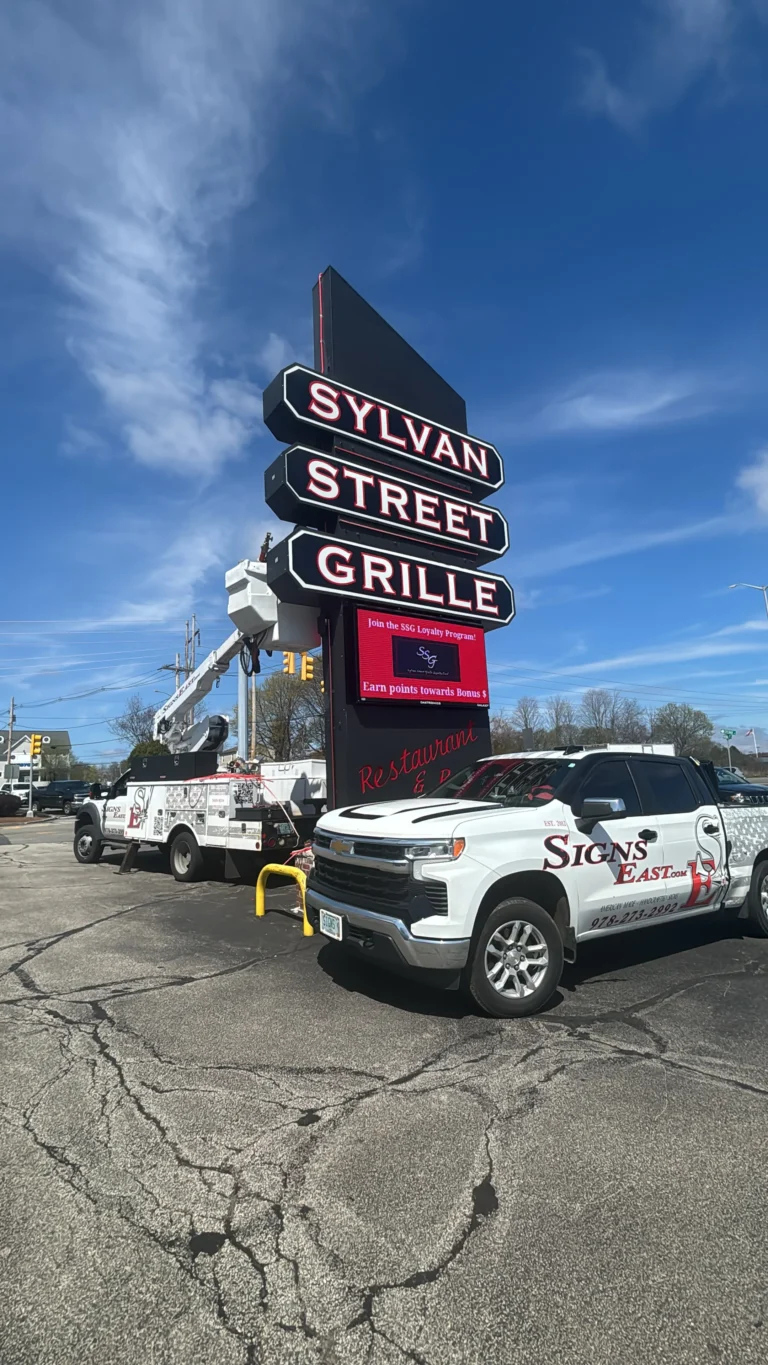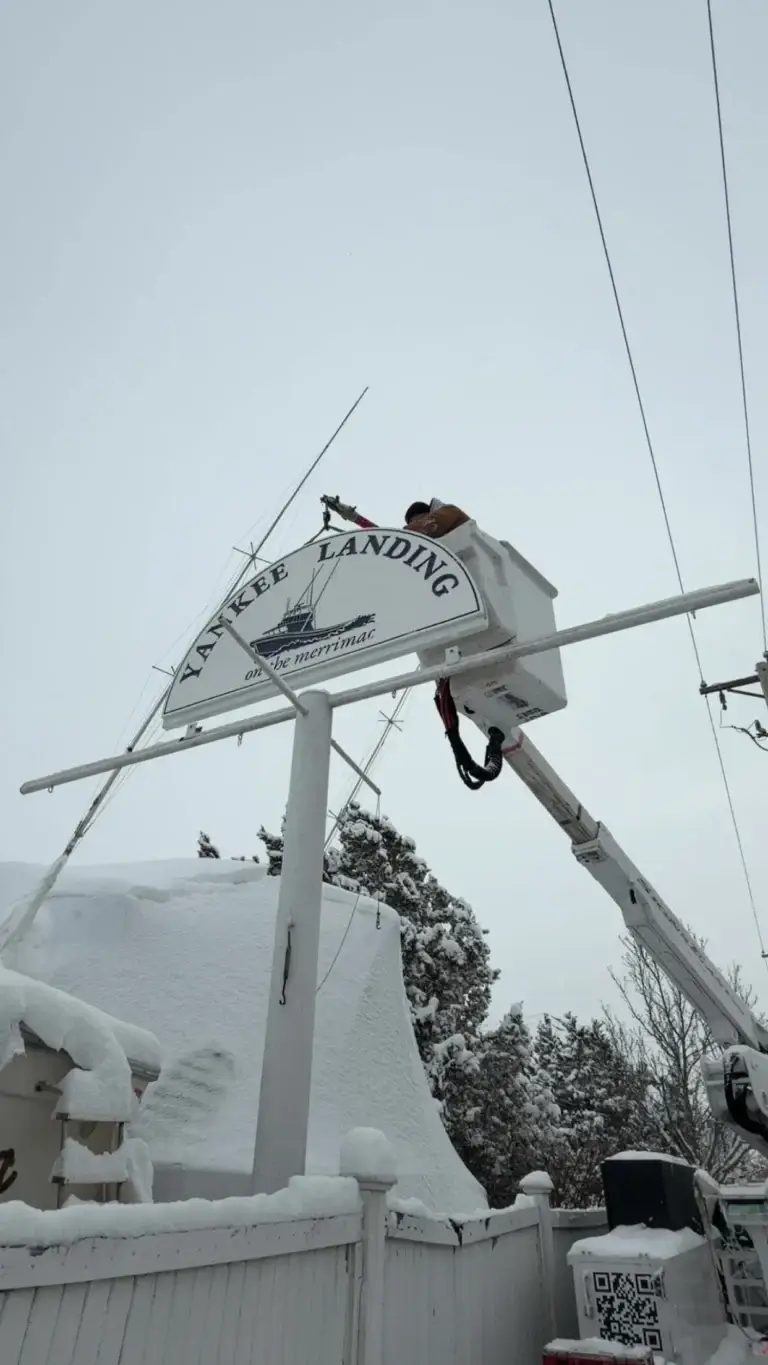
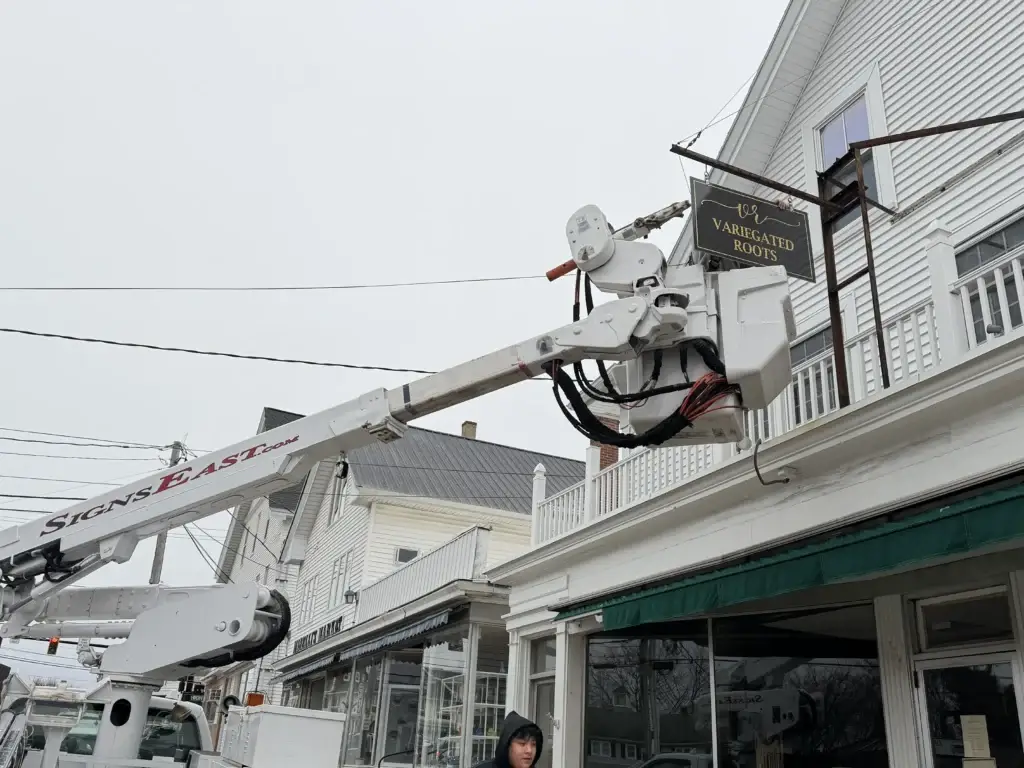
Illuminated signs in New Hampshire require an electrical permit before any wiring connects to power, plus a UL 48 label on channel letters and cabinets confirming the sign meets national electrical safety standards. Your local inspector then verifies the installation matches approved plans. The town’s sign approval is a separate step, covered in our NH sign permit guide. This post covers the second approval: the electrical side.
Why Does Sign Permitting Start Before Fabrication?
Permitting belongs at the start of your sign project, not the end. Design and fabrication come second. For a channel letter set or illuminated cabinet going up anywhere in New Hampshire, the paperwork has to move alongside the production schedule, not after it.
For a lighted sign, the electrical approval runs on its own track from the town’s sign approval. It covers the circuit, the disconnect, the sign’s UL listing and a final electrical inspection before the sign is powered up.
What happens if you skip permitting until the sign is already built?
You end up with a finished sign sitting in a warehouse instead of on your building. A cabinet or letter set that cannot legally connect to power is a liability, not an asset.
How does a sign company handle this correctly?
A sign provider that plans ahead accounts for permit requirements, zoning restrictions, and inspection timelines before cutting any material. Signs East coordinates the necessary permits and inspections for New Hampshire businesses.

What Does UL Listing Actually Certify?
UL 48, the Standard for Electric Signs, sets the benchmark for evaluating illuminated signs and channel letters sold and installed in the United States. This standard covers electrical, fire, and mechanical safety for indoor and outdoor signage, cabinets, channel letters, and LED units. If you are putting up a lighted cabinet sign in Manchester or new channel letters on a storefront in Nashua, this is the standard your inspector cares about.
A UL listed sign is not just a sticker. The mark signals a layer of protection for your building, your customers, and your daily operations.
Approval does not hinge on parts alone. It depends on three things working together: the finished sign assembly, the certification program applied to it, and the requirements set by your local authority having jurisdiction. A transformer with a UL mark does not guarantee a compliant sign if the overall assembly was never evaluated as a unit.
Does Every Component Need Its Own UL Mark?
Not exactly. Sign electrical inspection in NH jurisdictions focuses on the complete, assembled sign rather than individual parts in isolation. Problems surface when an inspector questions a specific label, a swapped component, or a field modification made after the original listing.
What Triggers a Failed Inspection?
Field changes cause most disputes. Common red flags include:
- A transformer swapped without matching the original listing
- Wiring modified after the sign left the fabricator
- Labels missing or damaged during installation
- Components mixed from different certification programs
Keeping documentation intact protects your sign through every inspection cycle across New Hampshire municipalities.
What Does the Electrical Permit Process Involve?
An illuminated sign electrical permit confirms that your new channel letters, cabinet sign, or monument sign meet recognized national safety standards before power ever reaches the fixture. In New Hampshire, that review protects your building, your tenants, and your insurance standing. Missing required permits can delay approval and the final electrical connection.
Permitting exists because electrical work is not optional paperwork. Permits are legal requirements tied to the National Electrical Code, including NEC Article 600 sign provisions governing branch circuits, grounding, and disconnect placement. A municipal building department in your New Hampshire town will check your plans against these rules before issuing approval.
New Hampshire’s state building code adopts the 2023 National Electrical Code. Under NH RSA 319-C:1, electrical installation work done for pay has to be done by a licensed electrician. Article 600 sets two rules owners run into most. Section 600.5 calls for a sign outlet at the entrance of each tenant space in a commercial building, on its own branch circuit rated at least 20 amps that feeds nothing else. Section 600.6 calls for a disconnect that shuts off every ungrounded conductor, placed where the circuit enters the sign or within sight of it (visible and no more than 50 feet away), or lockable in the off position if it is out of sight.
How long does sign permitting take in New Hampshire?
Timelines vary by town, but delays are common. Paperwork pile-ups and review queues at local building departments can turn what feels like a quick approval into a weeks-long wait. Each application requires its own set of forms, electrical plan sets, and follow-up communication with the reviewing office.
That back-and-forth steals time you did not budget for. It can push your finish date past your planned opening or renovation deadline. A typical New Hampshire sign permit file includes:
- Electrical load calculations and circuit details
- Manufacturer specification sheets, including UL 48 electric sign certification
- Proof of lighted sign disconnect placement for code compliance
Who manages the permit paperwork?
Business owners rarely have time to track every form and inspector request themselves. Signs East coordinates permits and inspection scheduling for New Hampshire sign projects.
How Can Business Owners Avoid Compliance Pitfalls?
Avoiding compliance pitfalls starts with planning electrical requirements before you order a sign, not after installation day. A lighted cabinet or channel letter set involves a mix of codes, standards, and product options that can trip up even an experienced property manager in Southern New Hampshire. Treating compliance as an afterthought almost always costs you time, money, or both.
Business owners across Rockingham and Strafford counties face a genuine challenge here. You want a sign that pulls customers off the road. It also has to meet strict electrical regulations before an inspector will approve it. Planning for electrical requirements early helps you avoid delays and rework.
This is exactly where UL listed signs earn their reputation. A UL 48 electric sign carries more than a label stuck on the side. The UL mark signals that the unit has been evaluated for electrical, fire, and mechanical safety, which protects your property, your staff, and your customers once the sign goes live.
What should you ask your sign company before signing a contract?
Ask who pulls the electrical permit and who makes the final hookup. Confirm the proposed sign meets NEC Article 600 sign wiring rules and includes a proper lighted sign disconnect for service access. A short checklist keeps surprises off your project timeline:
- Verify the sign carries a recognized UL listed sign label before fabrication begins
- Confirm permit and inspection responsibilities in writing
- Ask who handles disconnect placement and electrical hookup
A provider serving New Hampshire businesses, including Signs East, builds these steps into the process from the first design conversation, not after the sign ships.
Who Handles Permits and Inspections for Your Sign?
Signs East coordinates permits and inspection scheduling for New Hampshire sign projects. Before work starts, confirm who will pull the electrical permit and which licensed electrician will make the final hookup.
Signs East is based in Kingston, New Hampshire, with a second office in Seabrook, close to the Southern NH and Seacoast businesses planning new channel letters or lighted cabinet signs. That location puts coordination within easy reach for permitting offices across the region, rather than routing everything through a distant office unfamiliar with local requirements.
Does the sign shop or the property owner file the permit?
A sign shop that accounts for permitting before fabrication starts should coordinate the necessary permits and inspections on your behalf. This matters because an illuminated sign electrical permit often requires plan details that a fabricator already has on hand. Waiting until the sign is built to start this process risks a finished product that cannot legally be connected to power.
The owner-operated shop handles work on neon, LED, channel letter, cabinet, monument, and pylon signs throughout Southern New Hampshire, the Seacoast, and North Shore Massachusetts. That range of experience matters for permitting, since each sign type triggers different review steps:
- Illuminated cabinet and channel letter signs typically require electrical review tied to the fixture’s listing.
- Monument and pylon signs often need structural sign-off before electrical work proceeds.
- Neon and LED retrofits can trigger inspection even without new construction involved.
FAQ
Do you need an electrical permit before installing an illuminated sign in New Hampshire?
Yes. An electrical permit covers the wiring and connection to power and must be in place before the sign is connected. It is separate from the town’s sign approval.
What does a UL 48 listing confirm on a sign?
UL 48 certifies electrical, fire, and mechanical safety for the complete assembled sign, including cabinets, channel letters, and LED units, not just individual components like transformers.
Who handles permitting and inspection coordination for sign installations in Southern NH?
Signs East LLC, based in Kingston, New Hampshire, works with owners on permit and inspection scheduling for sign projects across Southern NH.
Conclusion
The electrical side of a lighted sign comes down to three checks: a listed sign, a proper circuit and disconnect, and a passed electrical inspection. Planning a new illuminated sign or channel letters? Contact Signs East and we will walk through what your town and your inspector will want to see.