
Most shops selling "neon" are selling LED rope in a plastic tube. Signs East still heats real glass, bends it by hand, and fills it with gas, which is also why a cracked tube can be rebuilt instead of thrown away.



Signs East LLC designs, bends and repairs real neon signs. Tor Larson started the company in 2012 and still runs it. Glass is shaped by hand at the shop at 34 Route 125 in Kingston, NH, and a second office sits on Route 1 in Seabrook. The crew covers Southern New Hampshire, the Seacoast and North Shore Massachusetts, including Portsmouth, Exeter, Hampton, Salem, Haverhill and Newburyport. Neon work runs from custom logos and bar signs to vintage restoration, alongside illuminated cabinets, channel letters and sign repair. Bending happens in-house rather than overseas, so a cracked tube can be rebent to match instead of scrapping the sign. The Kingston Google profile holds a 4.95 rating across 100 reviews.
Design it, bend it, and fix it, all in the same building. There is a reason neon has been lighting storefronts and bar signs for over a century. The warm glow of gas inside hand-shaped glass creates an atmosphere that LED alternatives still do not quite match.
Signs East bends neon in-house. Glass tubes are heated, shaped by hand to your design, then filled with neon or argon gas and electrified. The result is a one-of-a-kind sign that draws eyes and sets the exact mood you are after.
Whether you need a classic "Open" sign, a custom logo, or a vintage-style piece for your restaurant or bar, the shop can build it from scratch or repair the neon you already have.
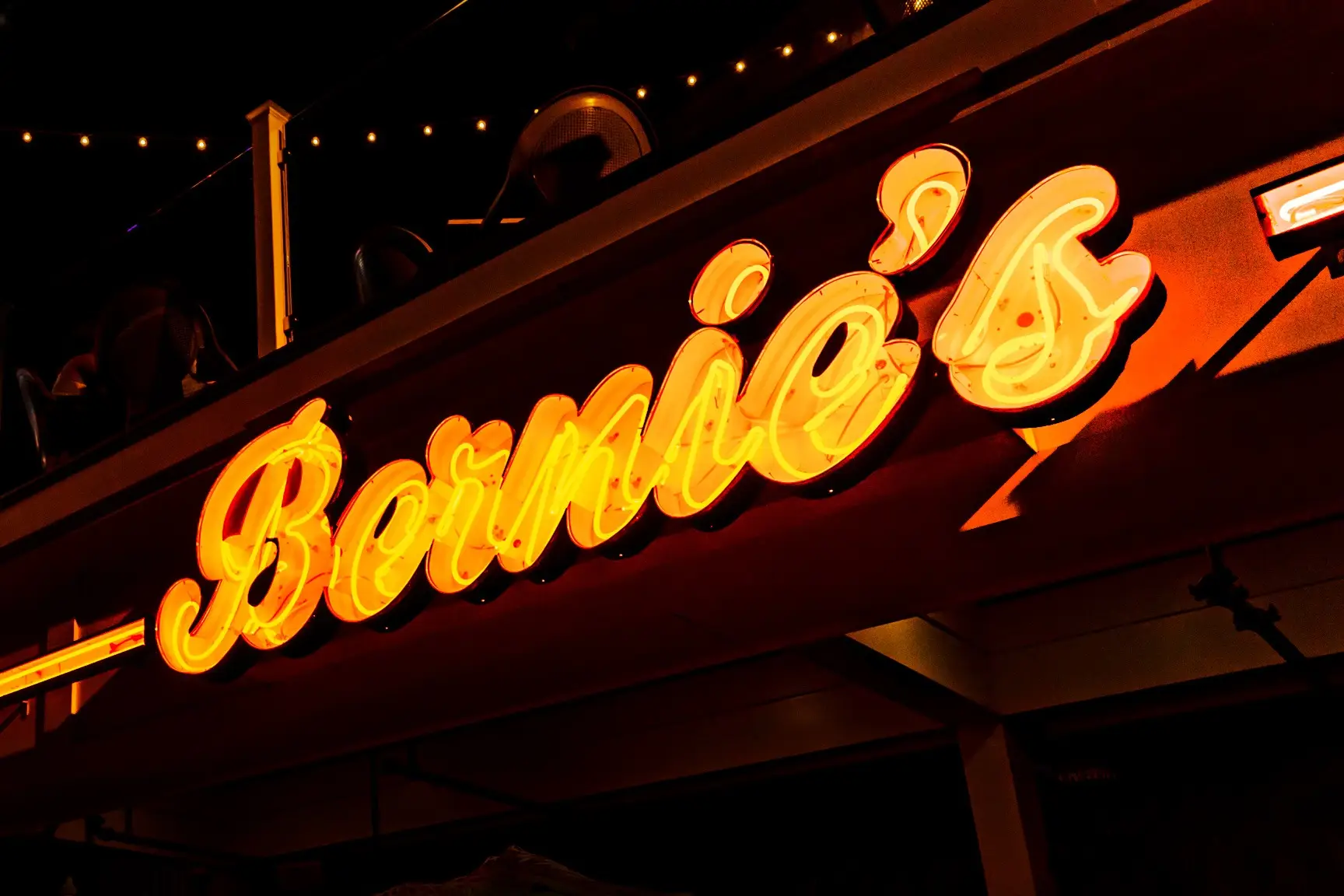
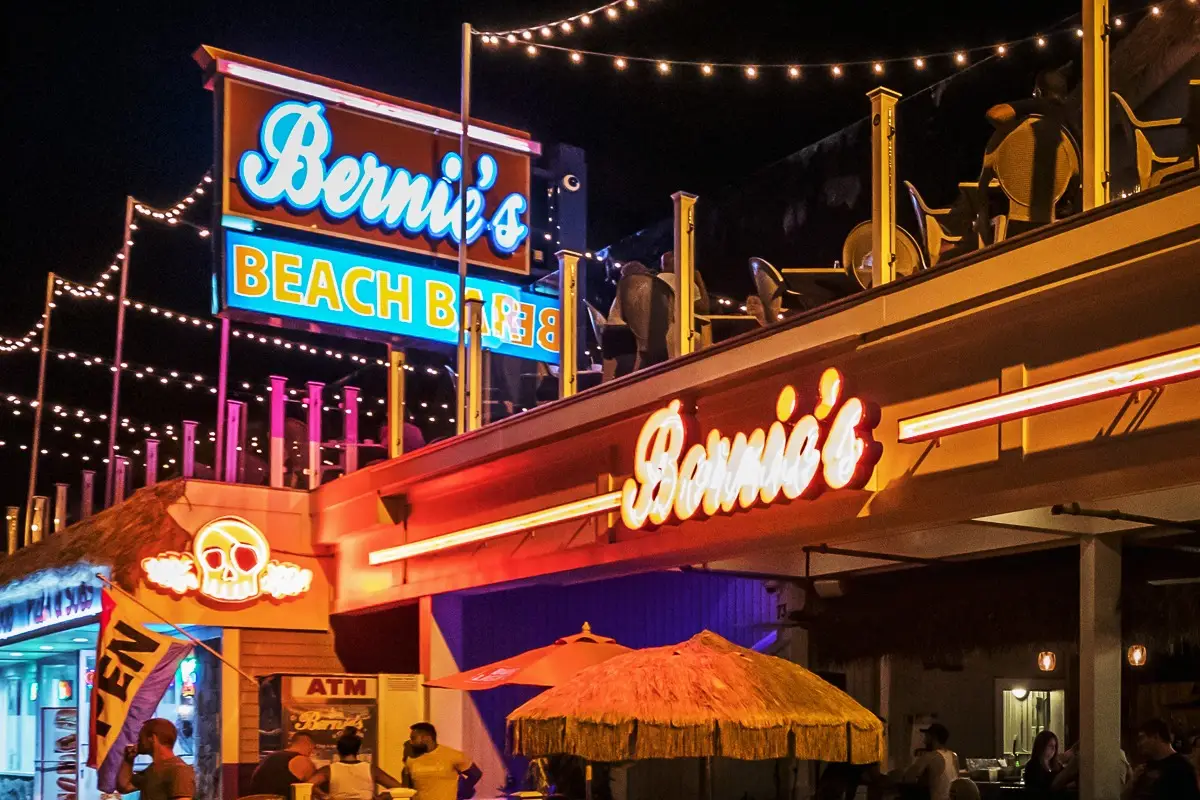
Neon is one of the few signs that has to do two jobs. It has to look right as an object in daylight, and it has to carry the room after dark. Here are the same signs, both ways.
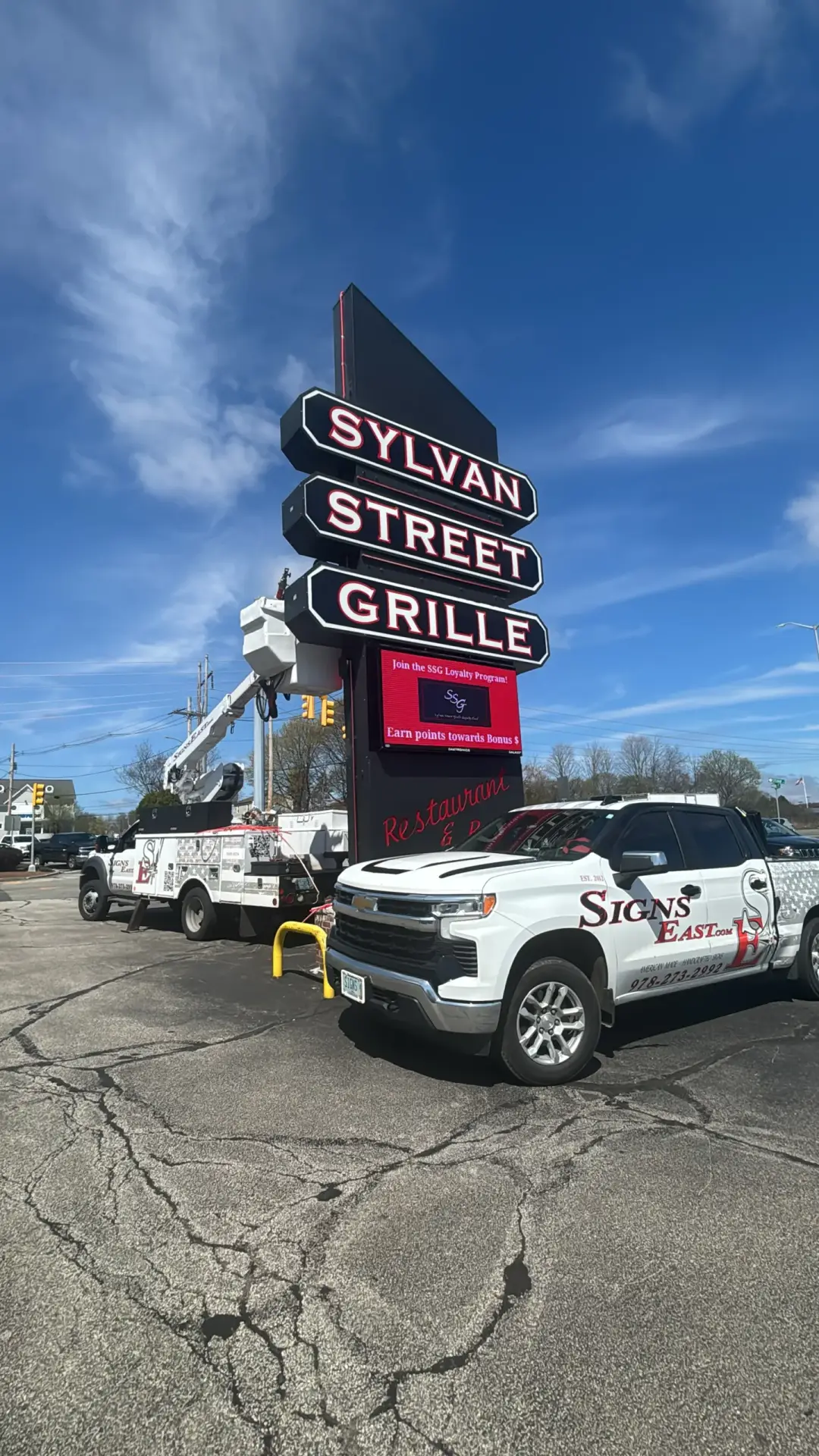 Day
Day
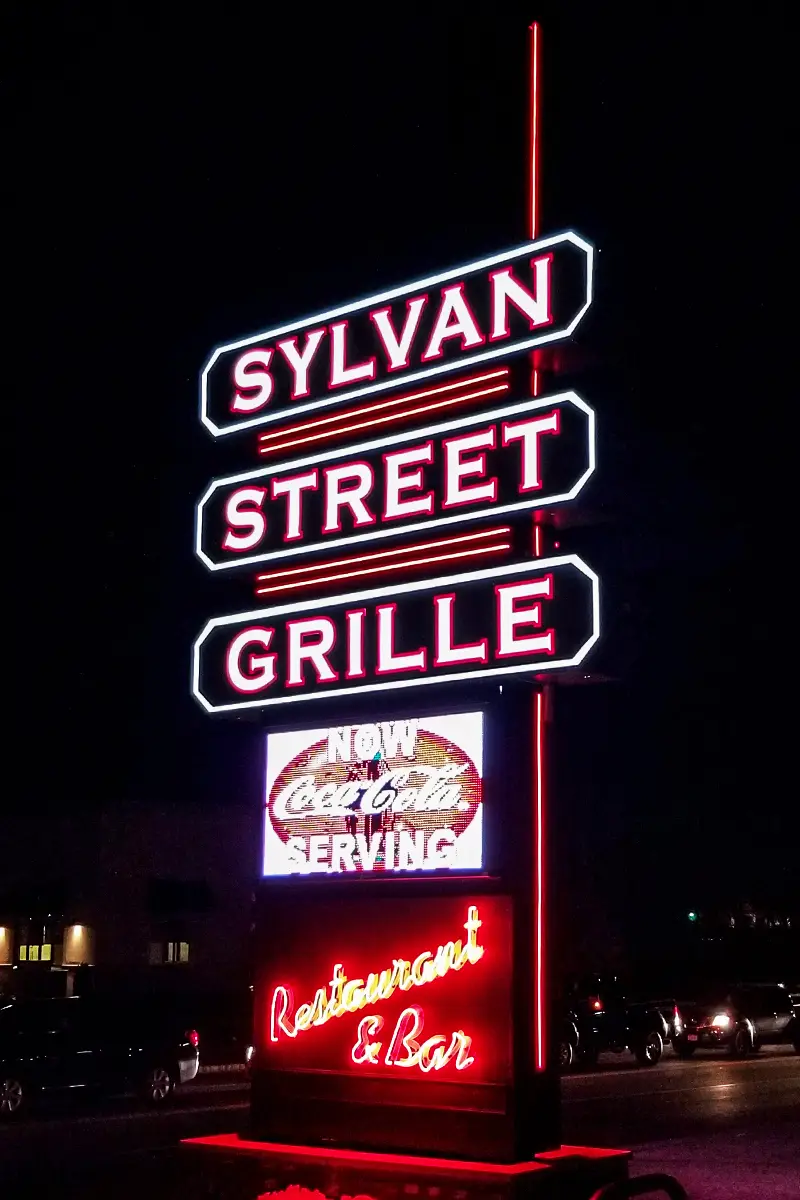 Night
Night
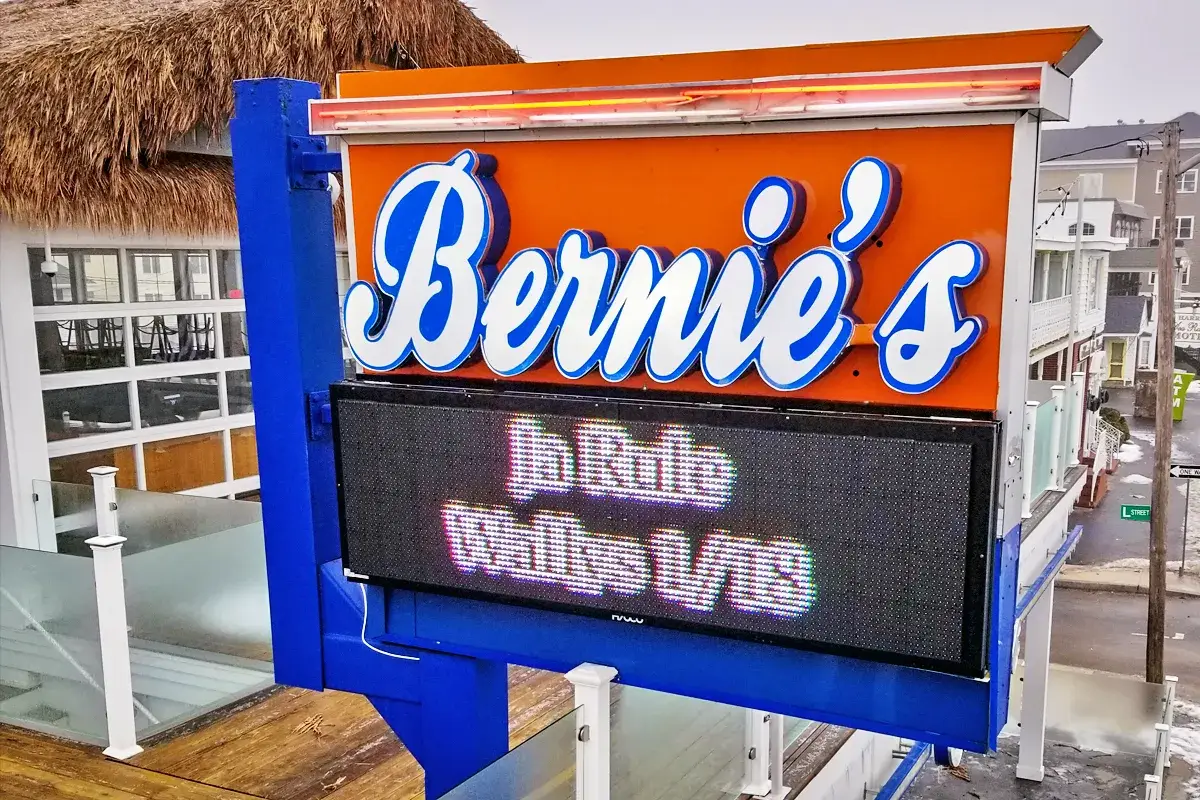 Day
Day
 Night
Night
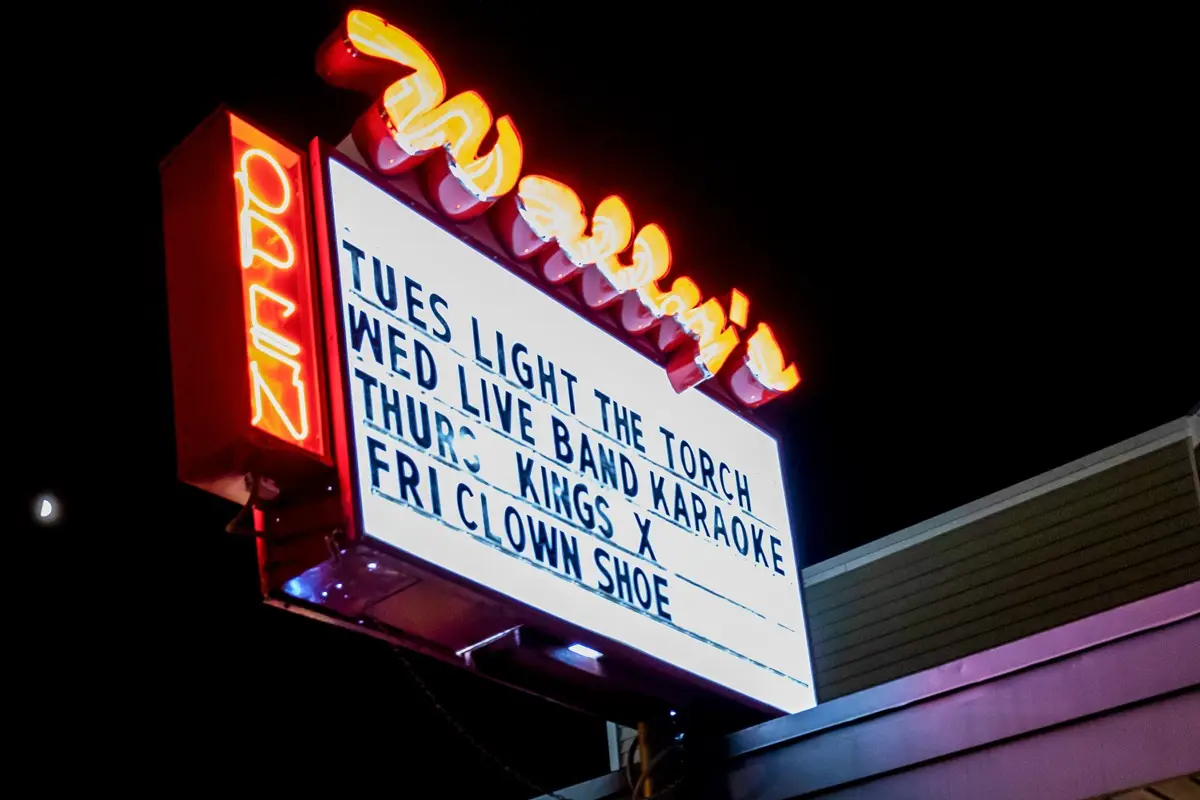
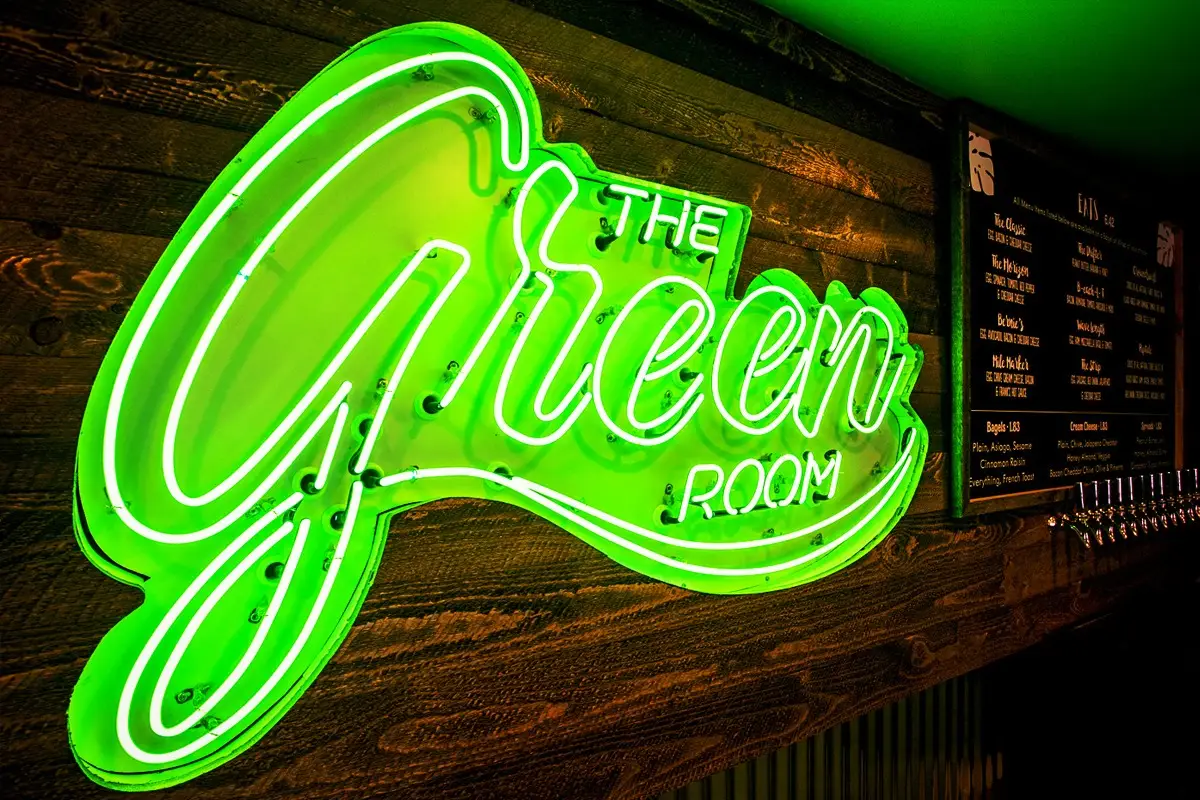
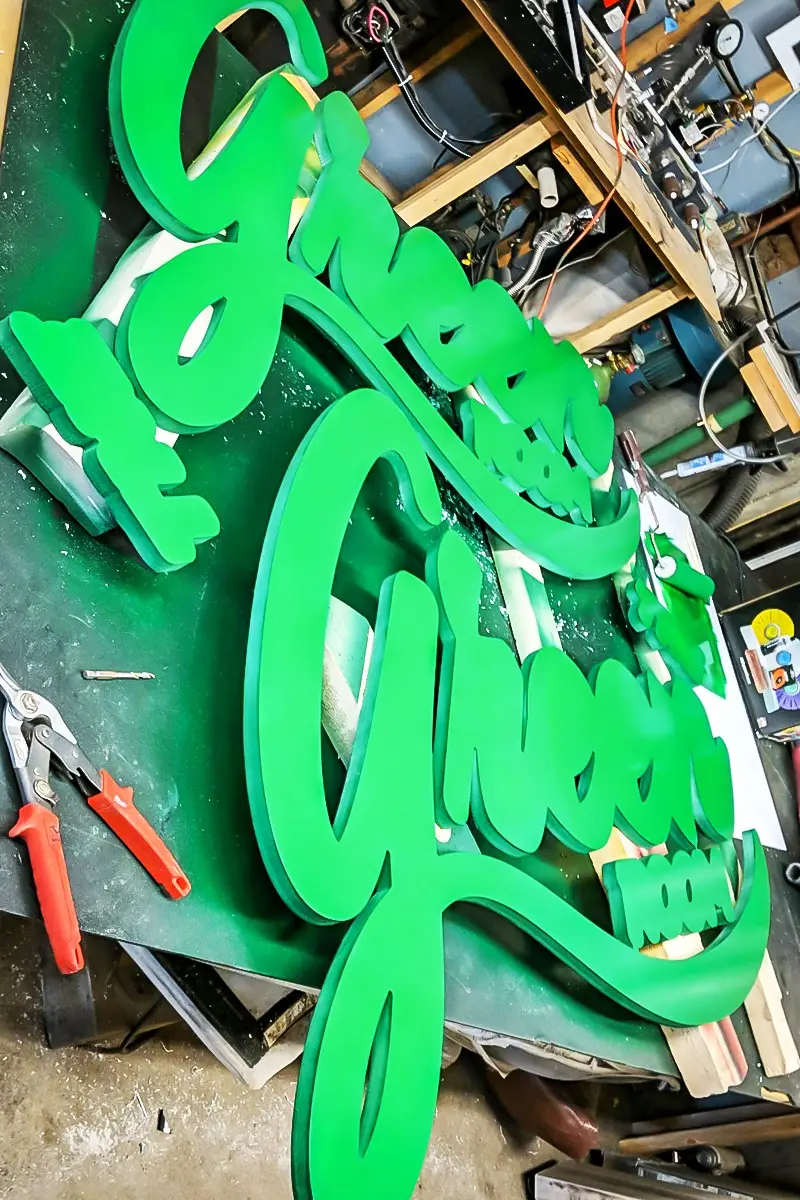
By hand, one tube at a time. Glass is heated until it moves, bent to the shape of your letters, emptied of impurities, then filled with gas and sealed. Here is what goes into every sign.
Each tube is heated and shaped by hand over a ribbon burner. No two pieces are exactly alike, and that is the character of real neon.
Neon gas glows red-orange, with its main emission lines between roughly 585 and 703 nanometers. Argon with mercury vapor glows blue.
Design and fabrication happen in Kingston, with no outsourcing to overseas factories. Faster turnaround and better quality control.
Broken tube? Flickering transformer? We diagnose and fix neon fast, often saving the cost of a full replacement.
Send a photo of the wall or storefront and a rough idea of what you want it to say. Signs East will mock up a neon concept at scale so you can see the glow and the size before anything is bent.
Get a Free Neon MockupWhen the atmosphere is the point. Neon is not for every project, but where it fits, nothing else comes close.
Not sure if neon is right for your space? Get in touch and we will help you figure out the best fit for the project and the budget.
Real neon is gas glowing inside hand-bent glass. LED neon is a flexible plastic tube with diodes inside, made to imitate that look. Both have a place, and they fail in different ways.
| Real neon | LED neon | |
|---|---|---|
| Glow | Light comes from gas filling the whole tube, so the glow has depth and a soft halo on nearby surfaces. | Individual diodes behind a diffuser. Even and bright, though flatter up close. |
| Color | Set by the gas and the phosphor coating. Each color is its own tube. | Set electronically. One run can change color or be programmed. |
| Energy use | Higher. Runs on a high-voltage transformer. | Lower. Runs on low-voltage DC. |
| Service life | 15 to 20 years with proper care. Tubes dim slowly rather than failing at once. | Shorter in practice. Diodes and drivers degrade, and the strip is usually replaced whole. |
| Outdoors | Works outdoors in weatherproof housing that shields the glass and the electrical components. | Easier outdoors, and takes impact better because there is no glass. |
| Repairability | A cracked section can be rebent and refilled. A failed transformer is a swap. | Usually replaced rather than repaired. |
| Cost | Higher up front, because every tube is made by hand. | Lower up front. |
| Best for | Bars, restaurants, vintage restoration, and anywhere the sign sets the mood. | Tight budgets, high-impact locations, color-changing effects, and long unbroken runs. |
Signs East builds both, and will say plainly which one suits the room. Where neither fits, channel letters are usually the next question: those are individual metal letters lit from inside or behind, sized to read from the road, while neon is built to be read close up and to throw color onto the space around it. Illuminated cabinets cover the cases where one lit panel carries the whole logo.
Usually, yes. Neon is one of the few sign types where a failure is normally a repair rather than a replacement. The glass, the gas, the electrodes and the transformer are separate parts, and each one can be dealt with on its own.
Most signs that come in are not beyond saving. A sign that has gone dark is often a transformer, which is a straight swap. A section that has cracked can be rebent from new tubing to match the original letterform.
Send photos of the sign lit and unlit, plus a shot of the transformer if you can reach it. That is usually enough for an honest first assessment.
See Sign Repair ServicesSimple designs start around $300 to $500. Larger or more intricate pieces run into the thousands. What moves a quote between those two ends comes down to how much glass has to be bent and how many separate tubes the design needs.
| Factor | Pushes cost down | Pushes cost up |
|---|---|---|
| Tube length | Short words, simple letterforms | Long names, taglines, and script that doubles the bend count |
| Number of colors | A single color throughout | Every added color is a separate tube, bent and filled on its own |
| Design complexity | Block letters and clean geometry | Tight curves, small counters, and detailed logo shapes |
| Transformer count | One transformer driving the whole sign | Longer runs or split circuits that need more than one |
| Backing and mounting | Mounting straight to an interior wall | Custom backers, standoffs, and structural attachment |
| Indoor or outdoor | Interior, where the glass is protected | Weatherproof housing, outdoor-rated components, and sealed wiring |
| Installation | Picking it up, or a simple interior hang | Height, lift access, electrical work, and traffic control |
Estimates are free. Send the wording, a rough size, and where it is going, and you will get a real number rather than a range. Request a quote.
Neon is bent at the shop at 34 Route 125 in Kingston, NH, with a second office on Route 1 in Seabrook, NH at 563 Lafayette Road. From those two points the crew covers Southern New Hampshire, the Seacoast, and North Shore Massachusetts. Bring a sign to the shop, or send photos and we will come to it.
4.95 out of 5 across 100 Google reviews.
"I absolutely love my signs."
"I absolutely love my signs for Lipix! Tor was there for me when I needed him, timely, professional, and so great to work with. He made the whole process easy. The quality of his work speaks for itself."
"Ideas on how to make my signs look better."
"Always giving me ideas on how to make my signs look better."
"Eye-catching designs."
"Tor and Signs East has been my go to for signage, decals and custom tinting since I was introduced to them. The customer service is outstanding."
Usually, yes. Broken tubes, bad transformers and wiring problems are all repairable. If a tube is cracked or has lost its gas, a new section can be rebent to match. Bring it in or send photos and you will get an honest assessment. More on sign repair services.
It depends on size, complexity, and the number of colors. Simple designs start around $300 to $500. Larger or more intricate pieces run into the thousands. The cost drivers section above shows which factors move the number. Estimates are free.
Turn it off and let it cool first, always. Dust the tubes with a soft dry brush or a microfiber cloth, working along the length of the glass rather than across the bends, which is where the tubing is most fragile. For grime, lightly dampen the cloth with glass cleaner rather than spraying the sign, and keep all moisture away from the electrodes, the wiring and the transformer.
Skip anything abrasive and skip pressurized air. On a painted or phosphor-coated tube, scrubbing takes the coating off with the dirt.
Not with an ordinary wall dimmer. A standard household dimmer on a neon transformer will make the sign flicker, buzz, or fail early, and it can damage the transformer.
Neon can be dimmed, but it takes a transformer designed for it or a dimming control matched to the sign. Ask before the sign is built, because that choice is made at the transformer, not afterwards.
Flickering usually means a transformer issue or a tube losing its gas charge. Buzzing often comes from the transformer or loose connections. Both are repairable. Do not ignore it, because small problems become bigger ones if left alone.
Simple designs can be done in a week or two. More complex pieces with multiple colors or intricate lettering take longer, because each color is bent as its own tube. You get a realistic timeline upfront, and unlike most shops, we hit our deadlines.
Yes, with proper weatherproofing. Outdoor neon needs protective housing to shield the glass and the electrical components from rain, snow, and temperature swings. Signs East builds outdoor-rated neon that holds up to New England conditions.
Real neon has a warmer, more authentic glow, which suits bars, restaurants, and anywhere you want that classic look. LED neon is more affordable and energy-efficient, and it works well outdoors or on a tighter budget. The comparison table above sets them side by side. Signs East builds both.
Tell us what it should say and where it is going. Tor will talk through the colors, the glass, and whether real neon or LED suits the room before anything gets bent.