
The ADA requires tactile characters, Grade 2 Braille, proper contrast, and exact mounting heights on signage throughout your building. Signs East designs, fabricates, and installs ADA-compliant room ID, restroom, wayfinding, and exit signs that pass inspection. Owner-operated since 2012, and we can survey your facility to tell you exactly what you need.
ADA-compliant signs are the tactile and Braille signs the Americans with Disabilities Act requires in public and commercial buildings. Signs East designs, fabricates, and installs them: room identification, restroom, wayfinding, and exit or safety signs. Each is built with raised tactile characters, Grade 2 Braille, at least 70% contrast, a non-glare finish, and mounting 48 to 60 inches to the baseline on the latch side of the door. We survey your facility to identify every required location, match the signs to your interior, and provide documentation of the compliance specs. We serve Southern NH, the Seacoast, and North Shore MA from our shop in Kingston, NH. Request a quote to get your facility compliant.
The Americans with Disabilities Act (ADA) requires specific signage in all public areas of buildings: restrooms, room numbers, exits, stairwells, and more. These signs must include tactile characters, Grade 2 Braille, proper contrast, and correct mounting heights.
Getting it wrong means more than a failed inspection. Non-compliant signage can lead to lawsuits, fines, and costly retrofits. We have seen businesses forced to replace entire sign packages because someone ordered the wrong specs online.
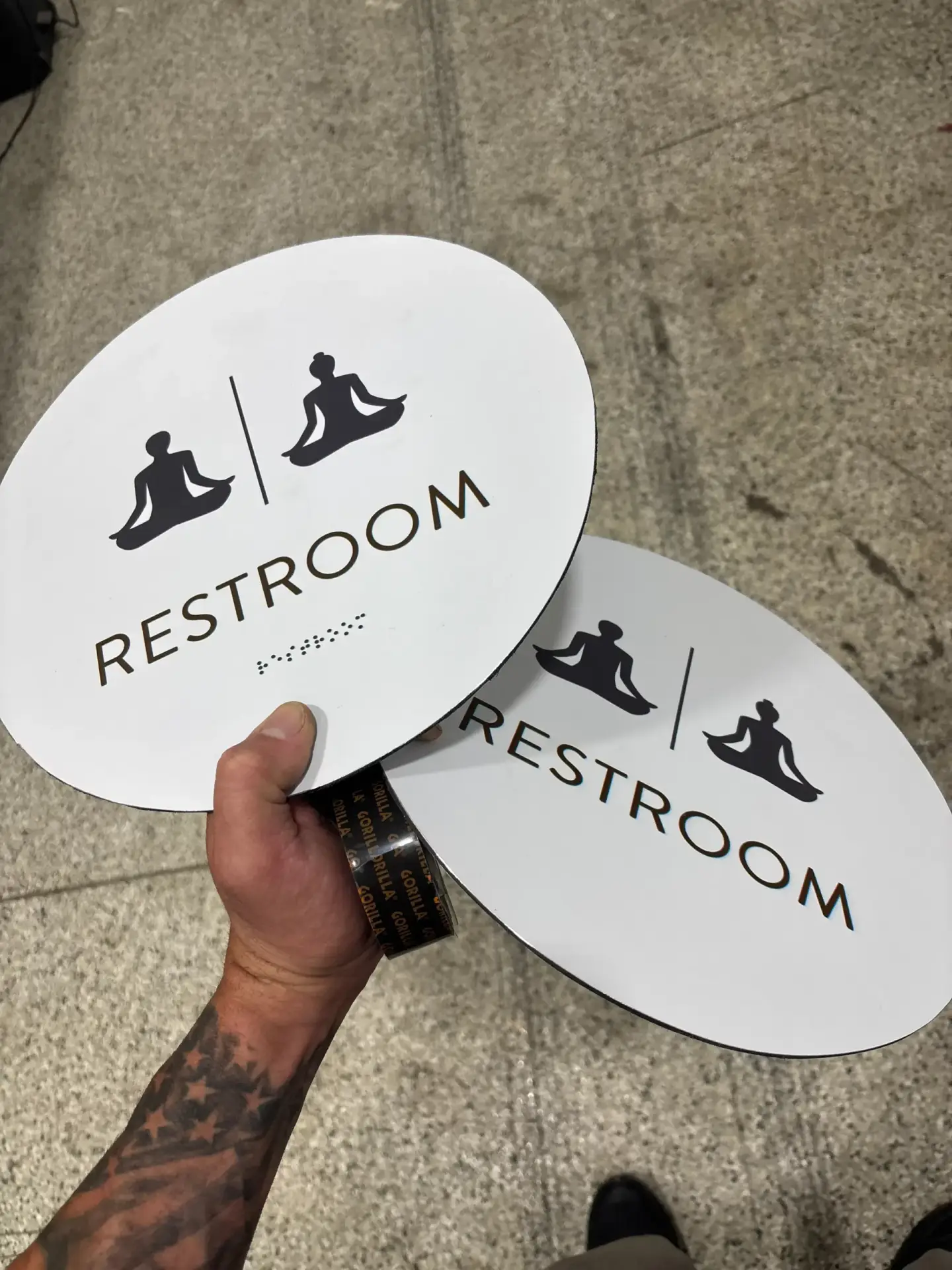
Important: ADA requirements are specific and non-negotiable. Character height, Braille placement, mounting height, and contrast ratios all have exact specifications. Generic "ADA style" signs from online vendors often do not meet actual compliance standards.
We design and fabricate ADA-compliant signage that meets federal requirements and passes inspection. Every sign includes proper tactile lettering, Grade 2 Braille, and documentation of compliance specs. We can also survey your facility and identify what signage you need.
Get an ADA Signage QuoteAll fabricated to federal ADA standards with tactile characters, Grade 2 Braille, and proper contrast ratios.
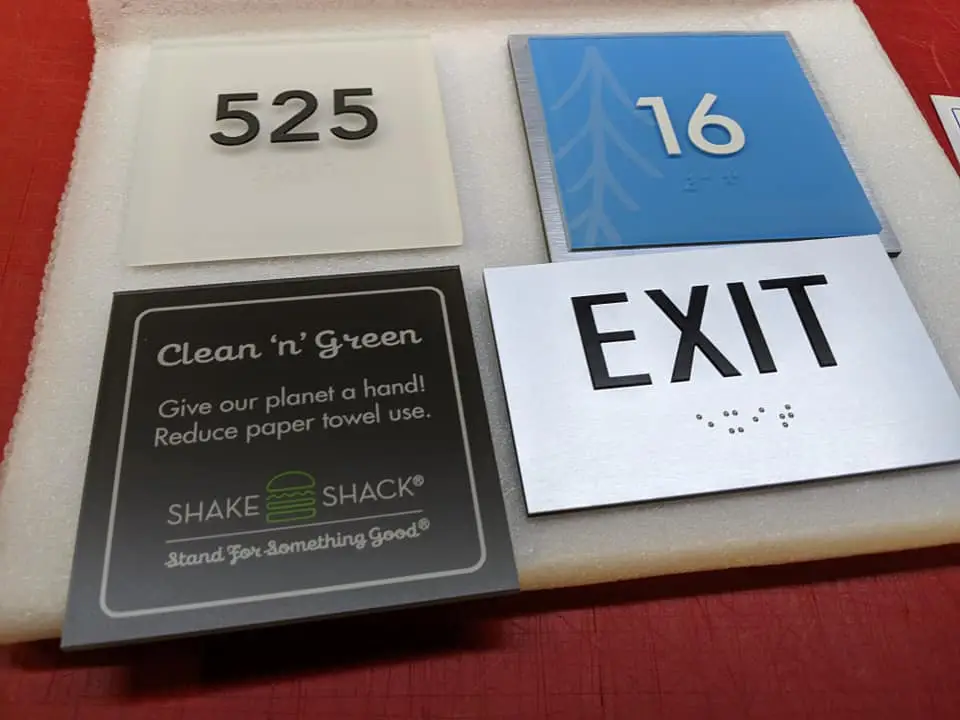
Room numbers, office names, and suite identifiers. Required for all permanent rooms and spaces. Includes raised tactile characters and Grade 2 Braille. Mounted at ADA-specified height on the latch side of the door.
Men, Women, All-Gender, and Family restrooms. Includes required pictograms, tactile text, Braille, and the International Symbol of Accessibility where applicable. Designed to meet both ADA and local code.
Directories, directional arrows, and navigation signs. Not all wayfinding signs require tactile elements, but overhead and projecting signs have specific requirements. We keep your wayfinding system compliant throughout.
Exit signs, stairwell identification, areas of rescue assistance, and emergency evacuation signage. These have specific requirements for tactile elements, photoluminescence, and mounting locations.
These are not suggestions. They are federal requirements with specific measurements.
Raised characters at least 1/32 inch. Sans-serif or simple serif fonts. Character height 5/8 inch to 2 inches for room signs. Tactile elements must be uppercase.
Contracted Braille (not Grade 1) positioned below the tactile text. Specific dot height, spacing, and placement requirements. Must be domed, not flat.
48 to 60 inches from the floor to the baseline of the lowest tactile character. Signs must be on the latch side of the door, not on the door itself, with specific clearance requirements.
70% minimum contrast between characters and background. Light on dark or dark on light both work as long as the contrast ratio is met.
The sign surface must have a non-glare finish. Glossy surfaces fail inspection. Matte or satin finishes are required for both background and characters.
When pictograms are used, they must sit in a 6 inch minimum height field. The text descriptor goes directly below the pictogram field.
From assessment to installation, we handle everything.
We can survey your building to identify every location that requires ADA signage: rooms, restrooms, exits, stairwells, and more. You get a complete list of what is needed, not just what you thought to ask about.
We design signs that meet ADA requirements while matching your interior. Colors, materials, and mounting hardware are selected to complement your space. You approve proofs before production.
Signs are produced with proper tactile characters, Grade 2 Braille, correct contrast ratios, and non-glare finishes. Every sign is inspected before it leaves our shop.
We install signs at the correct heights and locations. Proper mounting is part of compliance, since even a correctly made sign fails if it is mounted wrong. You get documentation of placement specs for your records.
Common questions about compliance and requirements.
Tell us about your facility. We will help you identify what is required and provide a complete quote.
View All Sign Services